Karlheinz Stockhausen (1928–2007)
Michaels Reise um die Erde (1978)
Act 2 of Donnerstag aus Licht
Opera in three acts, a greeting and a farewell
Concert performance
Category: Concert
-

Copy of Stockhausen
-
Stockhausen
[vc_row][vc_column][vc_column_text]Karlheinz Stockhausen (1928–2007)
Michaels Reise um die Erde (1978)
Act 2 of Donnerstag aus Licht
Opera in three acts, a greeting and a farewell
Concert performanceKarlheinz Stockhausen is considered as the inventor of pointillist music and moment form. The major representative of serialism was a pioneer of aleatoric and electronic music and also of abstract spatial composition. He acted as an unparalleled primary influence within the sphere of European post-war modernism, viewing the “zero hour” after the destruction during World War II as a historic opportunity for a radical new beginning. In his opera cycle Licht (Light), composed between 1977 and 2003 with the seven segments corresponding to the seven days of the week, he created a syncretic world theatre of creation with a total duration of around 29 hours, revolving around the archangel Michael, his adversary Lucifer and the ‘maid of the stars’ Eva in a monumental Gesamtkunstwerk of superlatives. The solo trumpet in Michaels Reise um die Erde represents the protagonist during a symbolic excursion into his own ego in which the music is a stylistic recreation of its individual stages (including Japan, Bali, India and central Africa). In Jerusalem, Michael finally encounters Eva with whom he becomes musically amalgamated in a “dense trill” (Stockhausen) in Himmelfahrt.[/vc_column_text][/vc_column][/vc_row][vc_row][vc_column][vc_single_image image=”2022″][/vc_column][/vc_row]
-
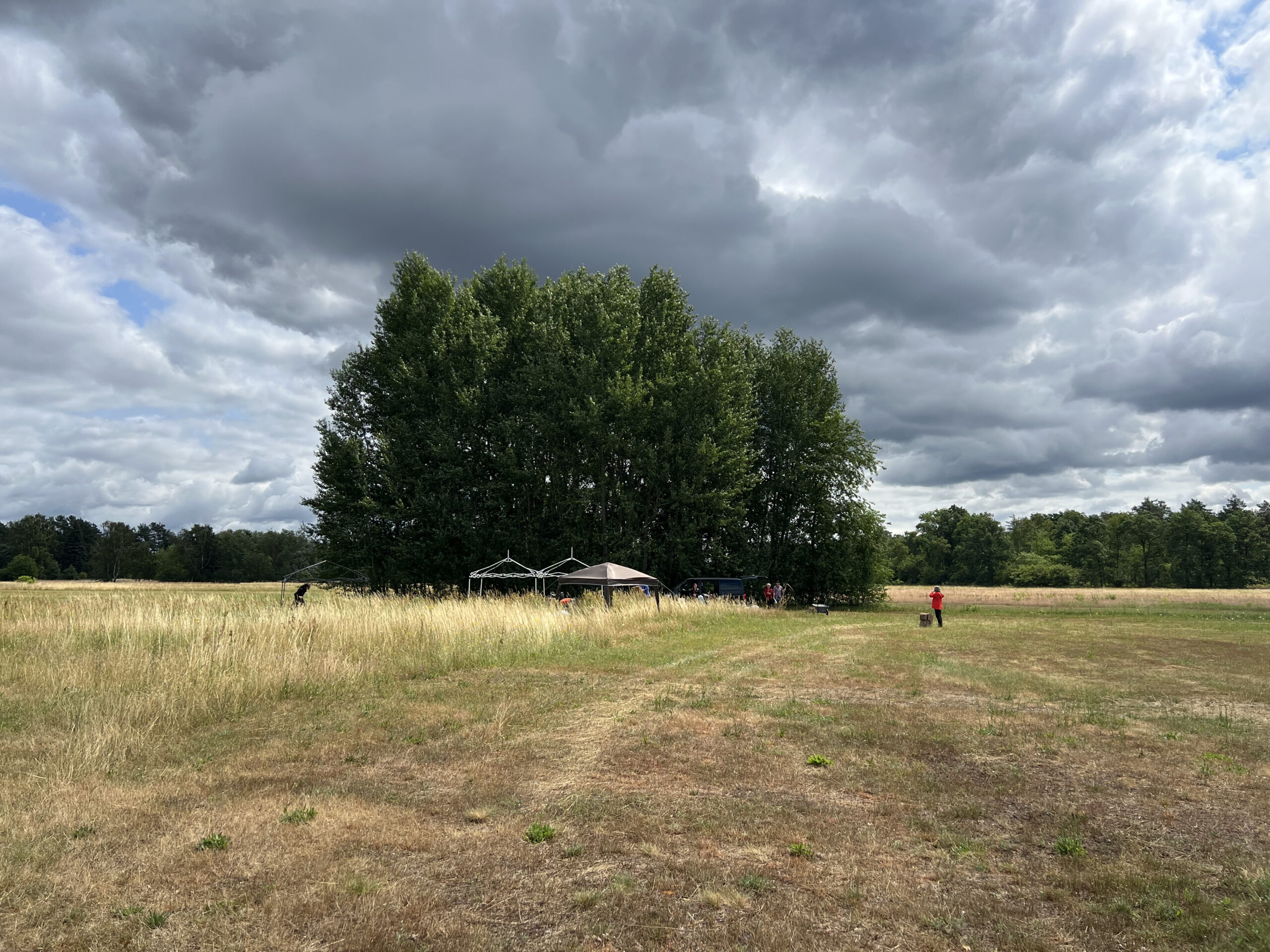
bbrrmm.
[vc_row][vc_column][vc_column_text]
Land-Schaf(f)t-Gras
“bbrrmm. A Sound Utopia in the Countryside for Two Cellos and Three Nature-Controlling Instruments”In his composition, Alex Nowitz stages the art of listening and responding—to the sounds of nature and fellow performers. The sound of the cello merges with the surrounding soundscape, while a tractor, a lawn mower, a chainsaw and a scythe become sensitive musical instruments. Following the instructions of a text-based score, the cellists compose in real time, creating a complex, noisy sonic texture that interacts with the sounds of the environment.[/vc_column_text][/vc_column][/vc_row][vc_row][vc_column][vc_single_image image=”2022″][/vc_column][/vc_row]
-
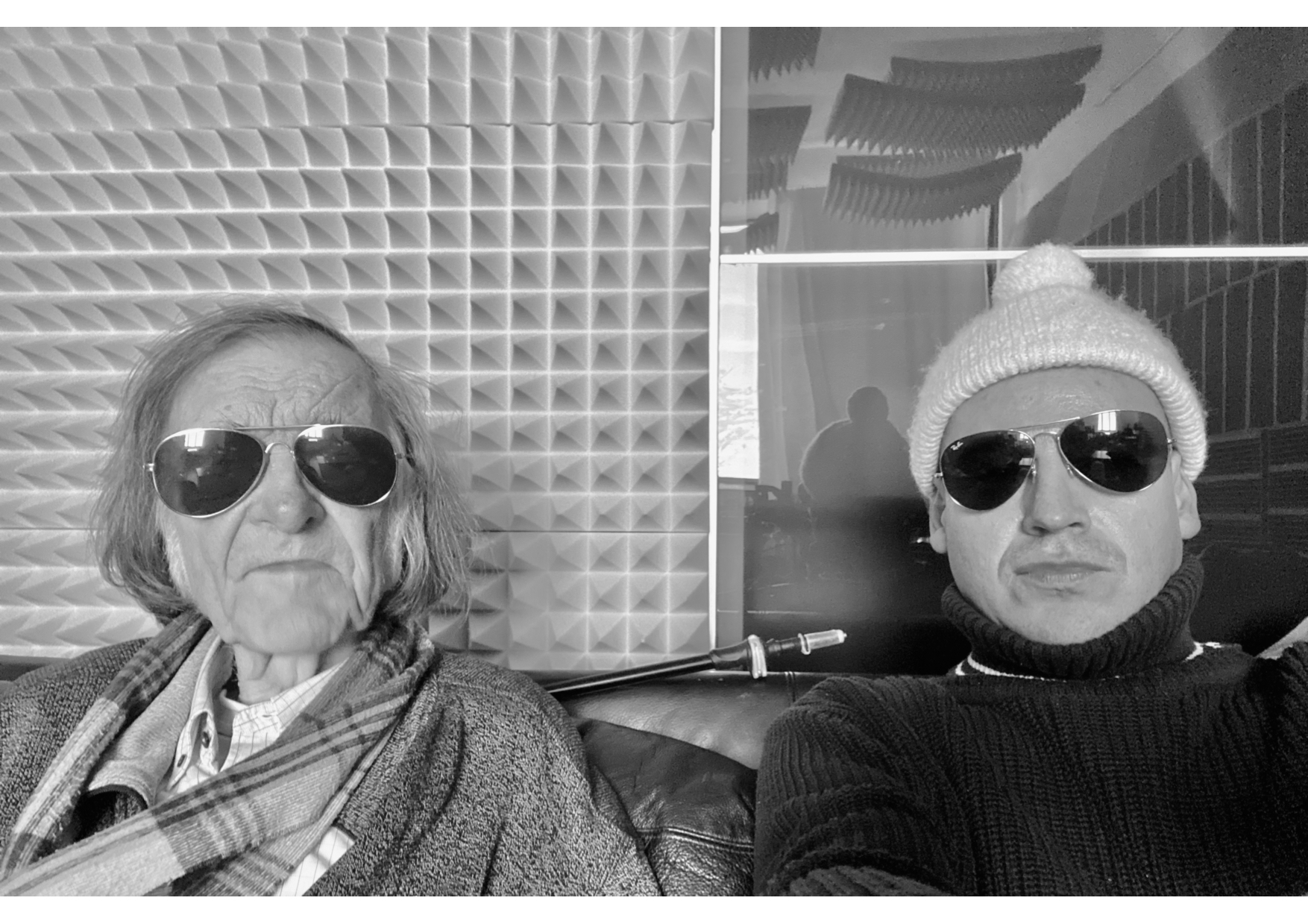
Lange Nacht für EA
[vc_row][vc_column][vc_column_text]
Ernstalbrecht Stiebler, from the mid-1960s onward, reduced a few sounds to even fewer, composing his music for a small circle of musicians with whom he maintained an active exchange. In doing so, he distilled what was essential to his work: invitations to listen, ever-new formulations of the idea of an inner auditory space that he invites the listener to enter. With a calm intensity, Stiebler’s music turns toward the single tone, fluctuation, and interval, giving rise to a music that may seem foreign while making an unfamiliar space perceptible. His music does not lend itself to emotional projection. In a conversation, he stated:
“Music is too important to be burdened with emotions.”
Thus, his pieces are usually sequences of quiet steps into the open—highly precise despite their freedom. Through the means of repetition, they become continuous acts of bringing the here and now into presence. Stiebler pursued a path that is nearly singular within Western contemporary music since the mid-20th century, related to John Cage, Morton Feldman, and Giacinto Scelsi, as well as to composers of his generation such as Christian Wolff, James Tenney, and La Monte Young. With persistence and depth, he followed an artistic path that a younger generation of musicians, composers, and listeners is now approaching.
In 2024, we (Biliana, Hauke and I) organized the EA:90 festival to mark Ernstalbrecht Stiebler’s 90th birthday. The festival was largely shaped by musicians who were very close to Stiebler and who had worked on his music with him over many years, in some cases since the 1990s. Unfortunately, Ernstalbrecht Stiebler was unable to attend the festival and passed away a few weeks later. Among his estate are works that have not yet been performed, which Stiebler dedicated to musicians from the festival circle and on which he had already worked with them; these form a central component of The Long Night for EA.
The concert combines music and film. It includes the aforementioned premieres, two important works from the 1980s, as well as an extended piece for cello and delay.[/vc_column_text][/vc_column][/vc_row][vc_row][vc_column][vc_single_image image=”2022″][/vc_column][/vc_row]
-
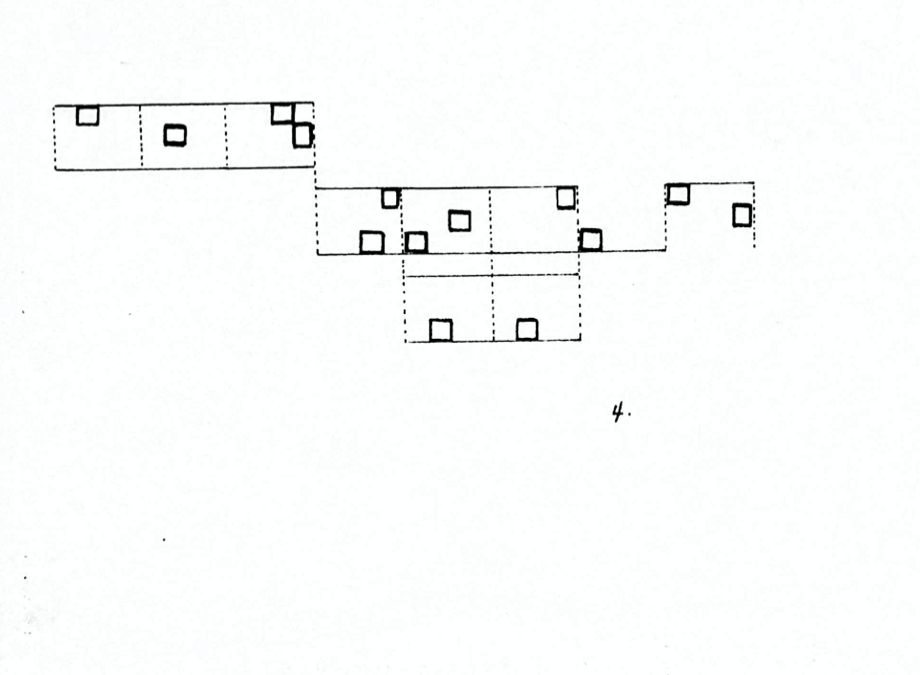
Projections
[vc_row][vc_column][vc_column_text]Jared Redmond and Tilman Kanitz performing pieces by Morton Feldman:
Durations 2 for Cello and Piano (1960), realisation 1
Piano Piece (1964), realisation 1
Projection 1 for Cello (1950), realisation 1
Intersection 2 for Piano (1951)
Projection 1 for Cello (1950), realisation 2
Intersection 3 for Piano (1953), realisation 1
Intersection 4 for Cello (1953), realisation 1
Intersection 3 for Piano (1953), realisation 2
Intersection 4 for Cello (1953), realisation 2
Piano Piece (1964), realisation 2
Durations 2 for Cello and Piano, realisation 2
[/vc_column_text][/vc_column][/vc_row][vc_row][vc_column][vc_single_image image=”2022″][/vc_column][/vc_row]
-

EA:90
[vc_row][vc_column][vc_column_text]“When music gives us space, gives us time, we notice how our perception changes the music. Thus, music becomes sensitized through differentiated, repeated structures that do not force the listener to merely follow what the composer has pre-conceived, but instead allow for participation—creating resonance in the broadest sense.”
–Ernstalbrecht Stiebler
Since the 1960s, Ernstalbrecht Stiebler has been reducing a few sounds to even fewer, distilling what is essential in his work: an invitation to listen, to continuously reimagine an inner space of hearing that he invites us to enter. With calm intensity, Stiebler turns his attention to a single tone, a fluctuation, an interval—allowing a sound space to emerge that feels unfamiliar. Through repetition, his music becomes a continuous manifestation of the here and now. His music resists emotional projection. As he once stated in an interview:
“I think music is too precious to be consumed merely for fleeting emotions.” – Ea. S.
As an outsider, he has persistently and rigorously pursued an artistic path—one that is now being met by younger generations. EA:90 is curated by three artists who have worked closely with Ernstalbrecht Stiebler for many years: Hauke Harder, Biliana Voutchkova, and Tilman Kanitz.
The concert Monochromy focuses on Stiebler’s compositions from the 1990s and his piano works. The concert Extension features Stiebler’s 1963 string trio Extension III, alongside recent works and music by female composers influenced by his approach. In the staged concert Sensitivity, ensemble and vocal works will be premiered.In recent years, Ernstalbrecht Stiebler has spoken about his music in terms of freedom and sensitivity—a new sensitivity. Based on this idea, EA:90 is a celebration of listening together.
Video excerpt of the festival: Stiebler: Im Takt
[/vc_column_text][/vc_column][/vc_row]
-
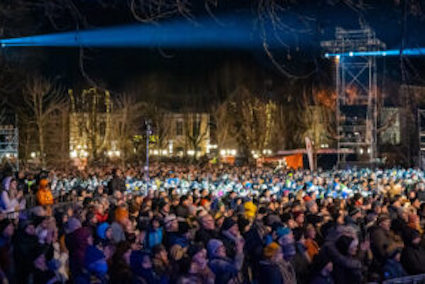
OPENING culture salts 2024
[vc_row][vc_column][vc_column_text]One of the oldest forms of communication in the alpine world, the yodel, sounded out in a chorus of 1,000 voices to open the year 2024 in the city of Bad Ischl with Hubert von Goisern. Doris Uhlich presented her powder dance. Conchita Wurst, Camo & Krooked and fanfare blowers from the 23 communities of the European Capital of Culture region were just some of the artists who shaped the opening event. The open air performance with more than 5.000 guests was sonically structured by immersive sound installations and musical miniatures by Tilman Kanitz.[/vc_column_text][/vc_column][/vc_row]
-
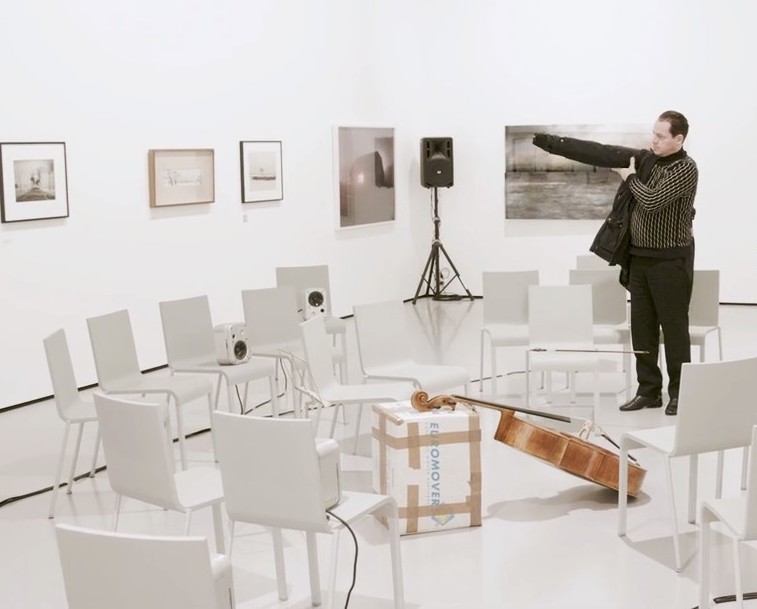
unter dem eis
[vc_row][vc_column][vc_column_text]
An Installative Concert by Tilman Kanitz and Sebastian Blasius
Concentric circles of chairs, a cellist, voices and cryptic sounds from loudspeakers evoking at times dissonant, absurd, and enigmatic images. In recent years, we have increasingly been shaped by the experience of how our Western self-understanding is crumbling—many had not anticipated the scale of the pandemic or the war in Ukraine. Perhaps we must learn a new form of perception in order to anticipate the unknown?
The installative concert under the ice, created by the artist and curator Tilman Kanitz and the director Sebastian Blasius, explores the relationship between what exists and its erosion. The foundation of the work includes an electronically slowed-down Sarabande for solo cello by Johann Sebastian Bach, as well as poetry by early Expressionist Georg Heym. The piece invites the audience to reflect on our present—and beyond—through processes of imagination and association.
Directed by: Tilman Kanitz, Sebastian Blasius
Music and sound design by: Tilman Kanitz
Voices by: Mélanie Fouché, Ernstalbrecht Stiebler, Sigal Zouk
Press quote by Rheinische Post: “These are confusing, icily cold, and often painful worlds of imagery that Blasius and Kanitz pick up on and literally bring to sound, (…) until only a single word remains—until even that word loses its meaning through constant repetition and dissolves into pure sound. In this way, the audience becomes witness to erosion; they experience disintegration, decay, and loss in their own listening experience. (…) Toward the end, as the words forget and skin have taken root, (…) cello sounds overpower the noise from the speakers, (…) bringing everything heard and experienced together into a fascinating whole.”
[/vc_column_text][/vc_column][/vc_row]
-
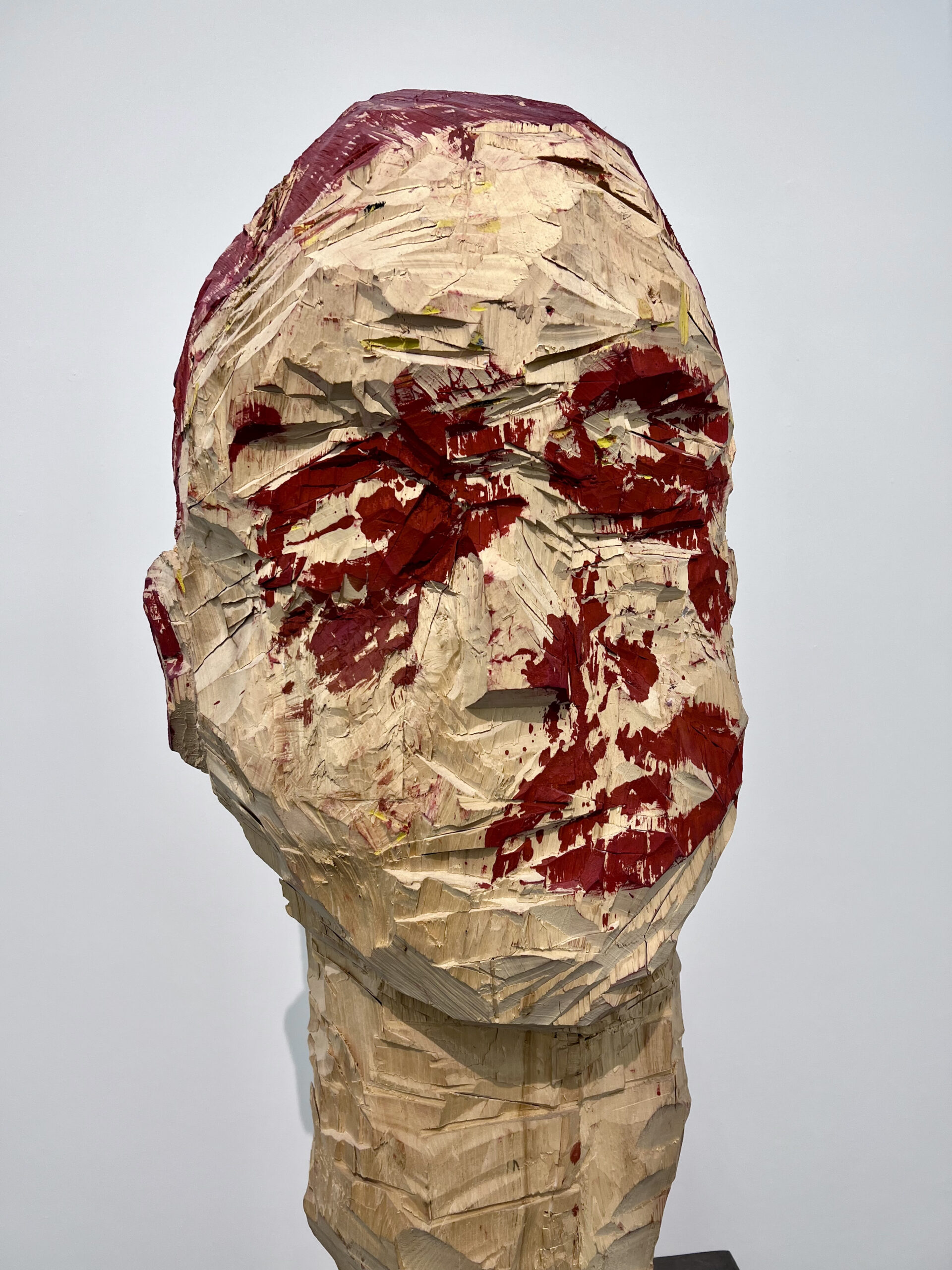
Übungen zur Verwunderung
[vc_row][vc_column][vc_column_text]Übungen zur Verwunderung was a two-hour sound walk through the Museum Küppersmühle for Contemporary Art. It created dialogues with the exhibited artworks and played with the unique acoustic possibilities offered by the former industrial compound, which became an artwork in itself through the restoration work carried out by architects Herzog & de Meuron. The music, curated and collaged by Tilman Kanitz, spanned pieces such as Bach’s Violin Sonatas, contemporary music by Helmut Lachenmann, Milica Djordjević and anonymous music from the 14th century, as well as a version of John Cage’s Atlas Eclipticalis (1962).
Duisburg Philharmonic Orchestra at Museum Küppersmühle for Contemporary Art
Art Direction and Staging by: Tilman Kanitz, Ludger Engels
Music Curation by: Tilman Kanitz
Program:
Johann Sebastian Bach: Verleih uns Frieden gnädiglich
Tilman Kanitz: Past Present Future, für Kontrabass, Cello, Sinustöne und Delay
Milica Djordjević: Do you know how to bark“ for Contrabass solo (2010)
Anonym: Trotto (Italien, 14. Jahrhundert), Flöte Solo
Georges Barboteu: Cinq Pieces Poetiques pour Cor Seul V. Mouvement très libre
Hildegard von Bingen: Antiphon „O Ecclesia“, Flöte Solo
Giacinto Scelsi: Tre Pezzi für Posaune, Nr. 1
Tan Dun: Heaven Earth Mankind (arr. F. Slenczka)
Toshio Hosokawa: Small Essay for Contrabass Solo
Georges Barboteu: Cinq Pieces Poetiques pour Cor Seul III. Mouvement très large
John Dowland: A Fancy, P. 6, Laute Solo
Giacinto Scelsi: Tre Pezzi für Posaune, Nr. 1 & 2
Helmut Lachenmann: Toccatina für Violine Solo (1986)
Claude Debussy: Syrinx (1913), Flöte Solo
Johann H. Kapsberger: Toccata VI Laute Solo
Alan Fabian: Out of Space, Kontrabass Solo
Giacinto Scelsi: Tre Pezzi für Posaune, Nr. 3
Zoltan Kodály: Sonate für Violoncello Solo, op. 8 II. Adagio
Georges Barboteu: Cinq Pieces Poetiques pour Cor Seul II. Mouvement tres libre
Georges Aperghis: Obstinate (2017), Kontrabass Solo
Jacob van Eyck: Der fluyten lusthof, Flöte solo Engels Nachtegaeltje
Malcolm Arnold: Fantasy for Horn, Op. 88
Dorothee Oberlinger: Improvisation für Bassflöte
Zoltan Kodály: Sonate für Violoncello Solo, op. 8 II. Adagio
Giacinto Scelsi: Tre Pezzi für Posaune
Johann Sebastian Bach – aus: Partita Nr. 1 in h-Moll, BWV 1002 Sarabande und Double
Richard Wagner – Siegfried-Ruf aus „Siegfried“
John Cage – Atlas Eclipticalis (1962)Credits:
Art Directors: Tilman Kanitz, Ludger Engels
Stage and musical director: Tilman Kanitz
Dorothee Oberlinger: Flöte
Jakob Wagner: Laute
David Barreda: Horn
Rocco Rescigno: Posaune
Tonio Schibel: Violine
Fulbert Slenczka, Tilman Kanitz: Violoncello
Christoph Weinig: Kontrabass
Francesco Savignano: Kontrabass
Philipp Lojak: Production[/vc_column_text][/vc_column][/vc_row] -
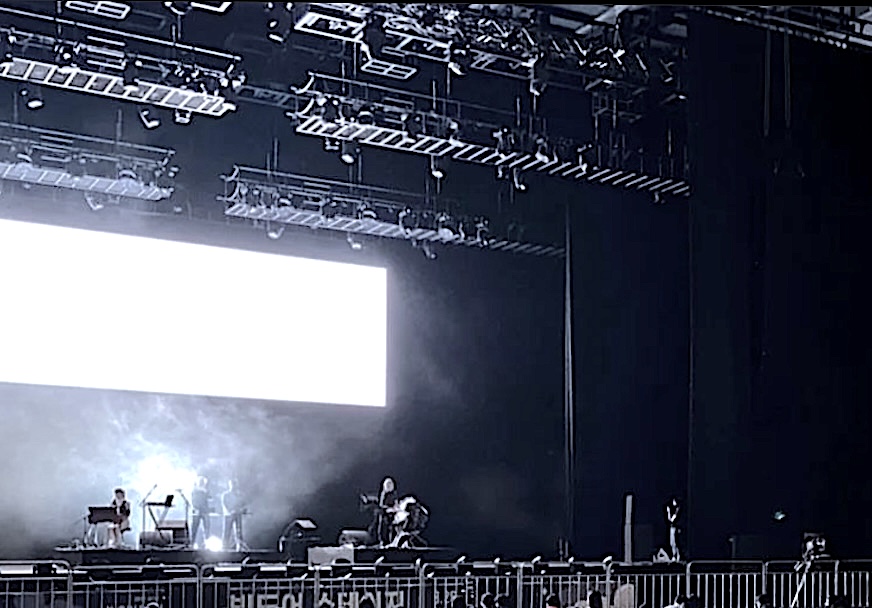
Dark Shadow
[vc_row][vc_column][vc_column_text]Music sample:
Duo project with the composer and vocalist Sebastian Claren: electronic music and spoken word. Debut at the ACC World Music Festival (Asian Cultural Center, Gwangju/South Korea). Album release planned for December 2026.[/vc_column_text][/vc_column][/vc_row]