Category: Dance

  • Eden I

    Eden I

    [vc_row][vc_column][vc_column_text]Video: click and watch


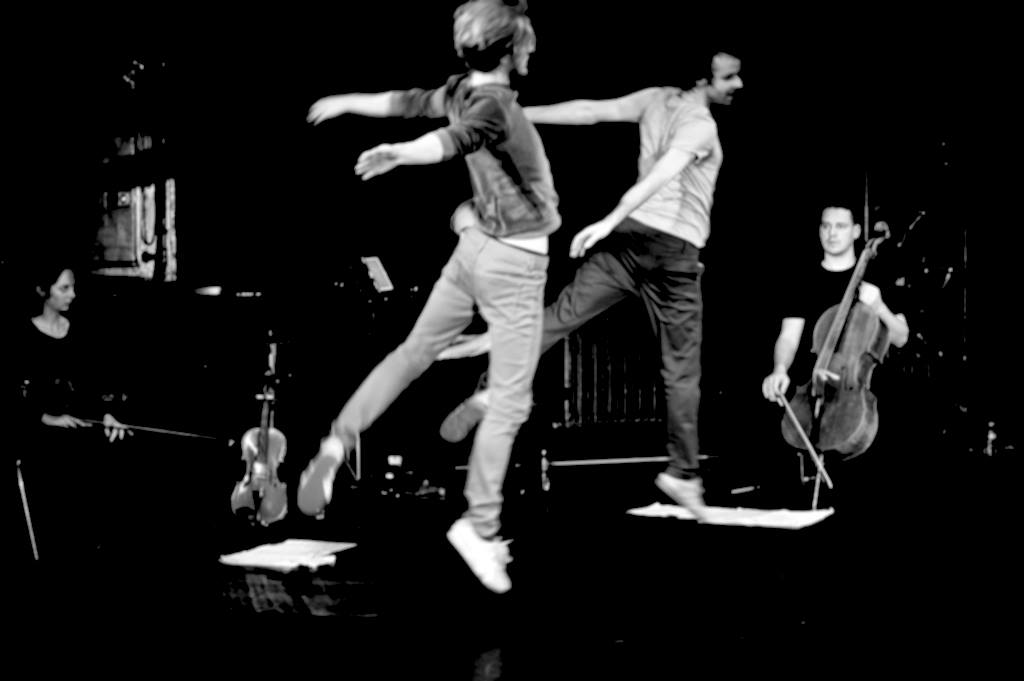
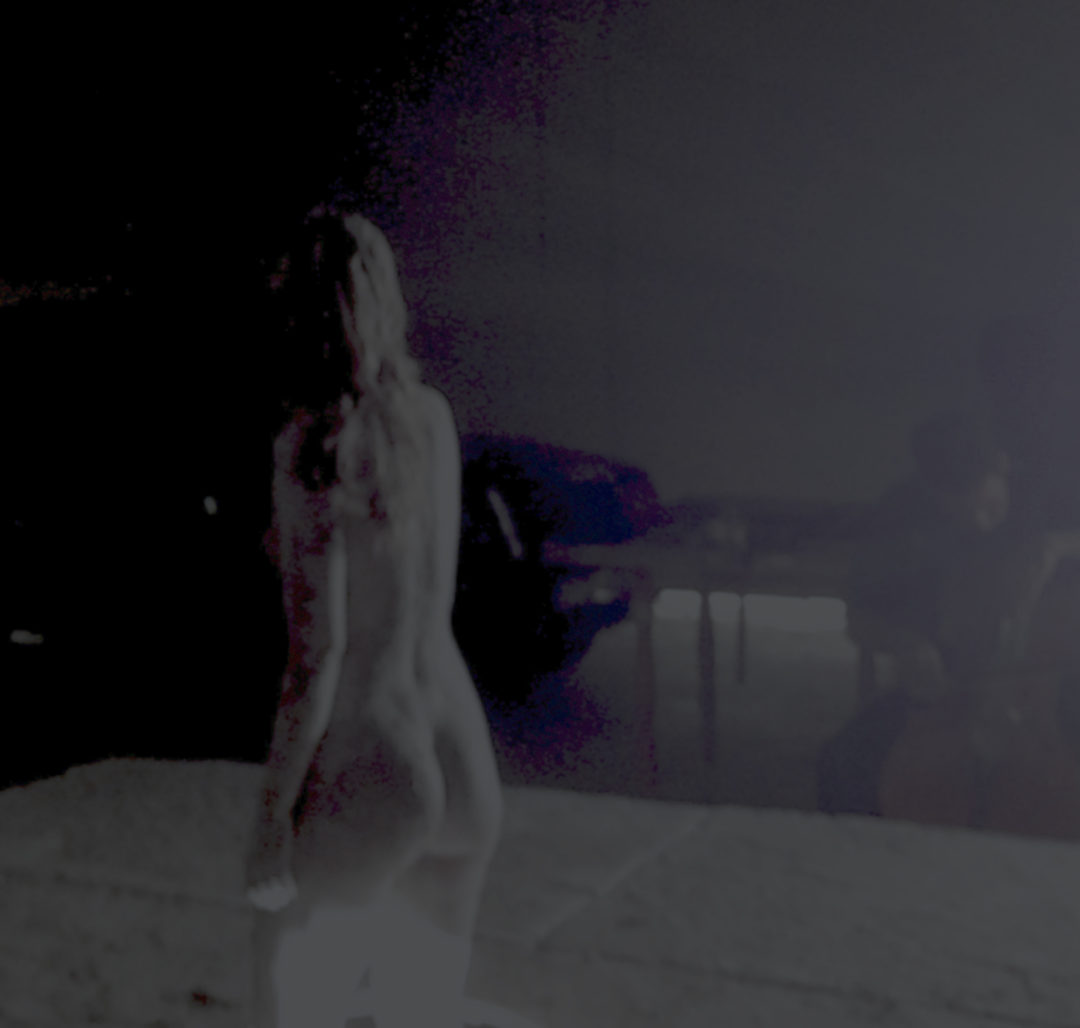
    Something is lost here. There are many things that are obviously lost. Having a nice and affordable place to live in, for example, or strong unions. But it’s not that, it’s something else. It has left us in such a determined way, that it is impossible to say what that thing was, that got lost. It can’t have happened long ago. Maybe just five years, or twenty.
    Something is lost here, and we don’t know what it is. What was the thing that is now lacking? Was it subtle and fragile? We don’t know. We circle around that lack, follow its traces, trying to find out, how it came into being. Why did we start lacking it, and how? Through studying the story of this loss, we hope to get a feeling of what that thing could have been.

    Tilman Kanitz and Niklas Draeger teamed up with stage and costume designer Anna Philippa Müller and co-choreographers Frank Willens, Ixchel Mendoza and Shade Théret, to explore this loss in a spatial experiment: How to relate to the space we are in? How do environments support human relations, or evaporate them? How can we embody space? How do environments disperse or swallow sound? How can we listen to the surrounding sounds, what can we add, and how does this addition support or transform what is already there? How can we be together?

    CREDITS

    Concept, Direction & Choreography: Tilman Kanitz & Niklas Draeger
    Costume & Stage: Anna Philippa Müller
    Co-Choregraphy: Frank Willens, Ixchel Mendoza and Shade Théret
    Music: John Dowlan (Fantasia for Lute solo, Flow my tears for Lute and Voice), Ernstalbrecht Stiebler (Dd for Cello solo, Im Takt for Bongos), Tilman Kanitz (lines 1, vers. 1+2 for Cello solo), Ernstalbrecht Stiebler (organ flute), Alexander Iezzi (Bongos), Pedro Alcacer Doria (Lute), Tilman Kanitz (Cello)
    Dramaturgy: Niklas Draeger
    Dramaturgical consultancy: Chloe Firouzian

    With: Pedro Alcacer Doria, Ernstalbrecht Stiebler, Alexander Iezzi, Tilman Kanitz, Ixchel Mendoza, Shade Théret, Frank Willens, Elijas Willens, Niklas Draeger

    Artistic realisation Costume: Anna Philippa Müller & Ines Dautel
    Artistic realisation stage design bus: Leander Kreissl
    Stage & costume design apprentice: Sophia Mitterhofer
    Production-Assistant: Max von Mechow

    Documentation: Amelie Kahn-Ackermann (Foto), Chloe Firouzian (Foto & Video), Arnold Trautwein (Video)

    Supported by: The NATIONALE PERFORMANCE NETZ – STEPPING OUT NPN, funded by the Federal Government Commissioner for Culture and the Media as part of the NEUSTART KULTUR. Dance Aid Programme.

    Click for full size image.[/vc_column_text][/vc_column][/vc_row][vc_row][vc_column][/vc_column][vc_column][/vc_column][vc_column][/vc_column][/vc_row][vc_row][vc_column][weston_gallery ids=”1743″][/vc_column][/vc_row]

  • Khaos

    Khaos

    [vc_row][vc_column width=”1/3″ animation=”wpb_bottom-to-top”][vc_column_text]Music: J.S. Bach, Wolfgang Rihm, John Cage
    Choreographer: Laurent Chétouane[/vc_column_text][/vc_column][vc_column width=”2/3″ animation=”wpb_bottom-to-top” offset=”vc_hidden-xs”][vc_single_image image=”1087″ img_size=”full” add_caption=”yes”][/vc_column][/vc_row][vc_row][vc_column width=”1/3″][/vc_column][vc_column width=”2/3″][vc_column_text]

    KHAOS

    Today, the present is synonymous with crisis. Chaos no longer appears merely as a state of exception but as an equally threatening and seemingly inevitable “model” for the future. Chaos evokes fear. Yet in contrast to this modern notion of pure threat, Khaos in ancient Greek thought is a far more ambivalent figure. It gathers multiple layers of meaning: a yawning void, a cleft, a chasm, an abyss—but also the horizon of expansion, the immeasurable, the rupture or opening. As a formless form and a striving toward something other than what already is, Khaos invokes dimensions of emergence, possibility, and renewal.

    In KHAOS, Laurent Chétouane brings together four dancers and three musicians to explore the possibilities of Khaosat the edge of chaos itself. The performance unfolds to music by Johann Sebastian Bach, Wolfgang Rihm, and John Cage—composers whose works resonate with an affinity for the uncontrollable. These turbulence zones within and between the musical pieces become the point of departure for the emergence of unstable, threatening, and destructive spaces to which both performers and audience are equally exposed.

    The traditional vertical axis of dance loses its visually organizing force; in these spaces—lacking fixed vectors and coordinates—the floor becomes the only point of support. Exposed to the possibility of falling, to loss, fear, and grief, dance evolves into an autonomous act of doing and becoming—a state without goal or predictable timeline. In this state, the body must discover new relations: to the Other, to the space, and to itself, in order not to be entirely consumed by blind and disparate forces or the contingency of openness.


    KHAOS thus tests the danger of the dissolution of order in a single world through chaos as a field of play for the creation of multiple worlds.

    Dance: Kotomi Nishiwaki, Tilman O’Donnell, Mikael Marklund
    Music: Mathias Halvorsen (piano), Tilman Kanitz (cello), Artiom Schischkow (violin)
    Choreography: Laurent Chétouane with the dancers
    Musical Concept: Laurent Chétouane with the musicians and Johann Günther
    Lighting: Jan Maertens
    Costume Design: Lydia Sonderegger
    Sound: Johann Günther
    Dramaturgy: Marten Weise
    Choreography Assistant: Sarah Blumenfeld
    Costume Assistant: Anna Philippa Müller
    Production: Christine Kammer, Hendrik Unger

    Special thanks to Jean-Luc Nancy and Jean-François Peyret for their dramaturgical guidance and counsel.

    A production by KHAOS GbR, co-produced with the Onassis Cultural Centre Athens, HAU Hebbel am Ufer Berlin, Kaaitheater Brussels, and Kampnagel Hamburg. Supported by the German Federal Cultural Foundation and the Basic Funding Berlin / The Governing Mayor of Berlin – Senate Chancellery – Cultural Affairs. With additional support from DOCK 11 / Eden***** Berlin.

    –

    KHAOS

    Gegenwart heißt heute Krise. Das Chaos scheint nicht mehr nur Ausnahmezustand zu sein, sondern ein gleichermaßen bedrohliches wie unvermeidliches ‚Modell‘ für die Zukunft. Chaos macht Angst. Der Vorstellung einer ausschließlichen Bedrohung gegenüberstehend, ist das Khaos in der griechischen Antike eine ambivalentere Figur. Es versammelt unterschiedlichste Bedeutungsebenen: Gähnen, Kluft, Schlund, Abgrund. Aber es benennt auch den Horizont von Ausdehnung, Unermesslichkeit, Aufbrechen oder Öffnung. Als formlose Form und Streben in Richtung eines Anderen als es schon ist, ruft Khaos die Dimensionen des Entstehens, des Möglichen, der Erneuerung auf.

    In KHAOS versammelt Laurent Chétouane vier TänzerInnen und drei Musiker zur Erkundung der Möglichkeiten des Khaos am Rande des Chaos. Auf der Bühne erklingt Musik von Johann Sebastian Bach, Wolfgang Rihm und John Cage, die eine Affinität zum Unkontrollierbaren aufweist. Die Turbulenzzonen in und zwischen den Musikstücken sind Ausgangspunkt der Entstehung instabiler, bedrohlicher, zerstörerischer Räume, denen PerformerInnen und ZuschauerInnen gleichermaßen ausgesetzt sind. Die traditionelle vertikale Achse des Tanzes verliert ihre visuell-ordnende Kraft und Halt bietet in diesen Räumen, ohne feste Vektoren und Koordinaten, nur noch der Boden. Der Möglichkeit des Sturzes, des Verlusts, der Angst und der Trauer ausgesetzt, wird der Tanz zu einem selbstständigen Tun und Werden, einem Zustand ohne Ziel oder planbare Zeitachse. Es entsteht dabei ein Körper, der neue Verhältnisse zum Anderen, zum Raum, zu sich selbst entdecken muss, um den blinden und disparaten Kräften, einer kontingenten Offenheit nicht ganz zum Opfer zu fallen. Die Gefahr einer Auflösung von Ordnung der einen Welt durch das Chaos wird in KHAOS als Spielraum der Schaffung multipler Welten erprobt.

    Tanz: Kotomi Nishiwaki, Tilman O’Donnell, Mikael Marklund
    Musik: Mathias Halvorsen (Klavier), Tilman Kanitz (Violoncello), Artiom Schischkow (Violine)
    Choreografie: Laurent Chétouane mit den Tänzern
    Musikalisches Konzept: Laurent Chétouane mit den Musikern und Johann Günther
    Licht: Jan Maertens
    Kostüm: Lydia Sonderegger
    Ton: Johann Günther
    Dramaturgie: Marten Weise
    Assistentin Choreographie: Sarah Blumenfeld
    Assistenz Kostüm: Anna Philippa Müller
    Produktion: Christine Kammer, Hendrik Unger

    Wir danken Jean-Luc Nancy und Jean-François Peyret für ihre dramaturgische Unterstützung und ihren Rat.

    Eine Produktion der KHAOS GbR in Koproduktion mit dem Onassis Kulturzentrum Athen, HAU Hebbel am Ufer Berlin, dem Kaaitheater Brüssel und Kampnagel Hamburg.
    Gefördert durch die Kulturstiftung des Bundes und die Basisförderung Berlin / Der Regierende Bürgermeister Berlin – Senatskanzlei – Kulturelle Angelegenheiten.
    Mit Unterstützung von DOCK 11 / Eden *****, Berlin.[/vc_column_text][/vc_column][/vc_row]
  • Bach / Passion / Johannes

    Bach / Passion / Johannes

    [vc_row][vc_column width=”1/3″ animation=”wpb_bottom-to-top”][vc_column_text]Solistenensemble Kaleidoskop
    Choreographer: Laurent Chétouane
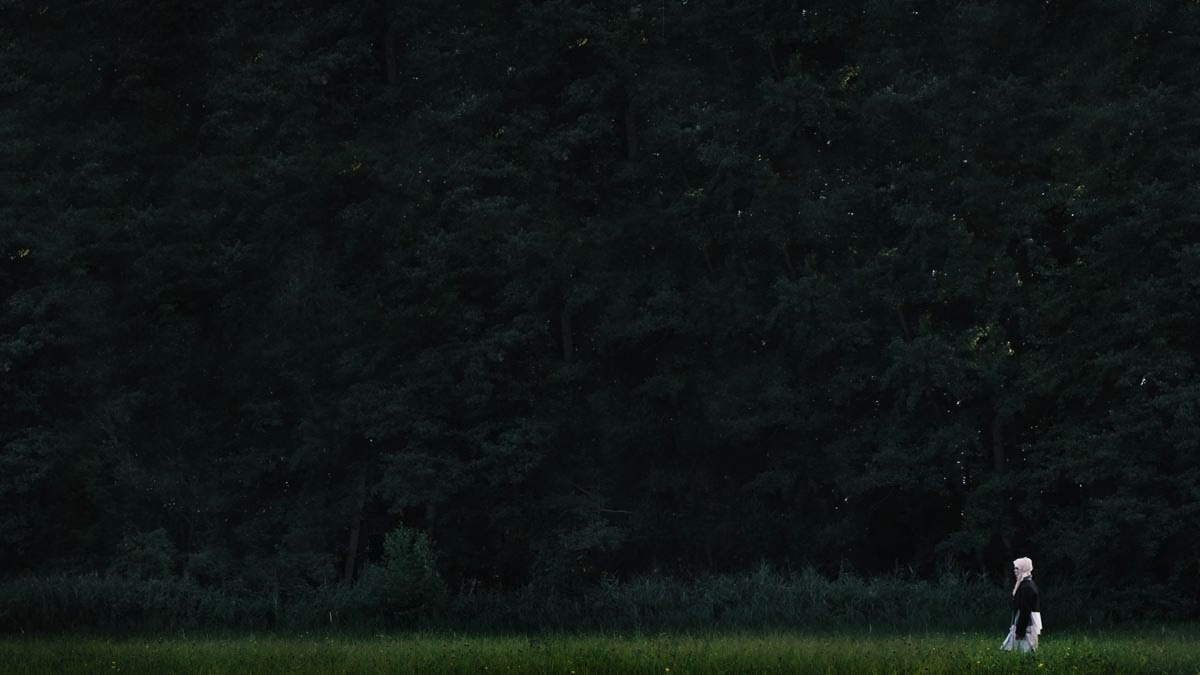
    Music: J.S. Bach[/vc_column_text][/vc_column][vc_column width=”2/3″ animation=”wpb_bottom-to-top” offset=”vc_hidden-xs”][vc_single_image image=”242″ img_size=”full” add_caption=”yes”][/vc_column][/vc_row][vc_row][vc_column][vc_column_text]Together with five dancers and seven musicians from Solistenensemble Kaleidoskop, Laurent Chétouane presents a revised version of Johann Sebastian Bach’s composition that was premiered in 1724.

    After M!M and 15 Variationen über das Offene the production forms the closing part of a trilogy on togetherness.

    If one puts J. S. Bach’s St John Passion on stage as a dance work, it is not Pilate’s cross-examination of Jesus that is staged. The focus is on listening to this ‘spectacular machine’ about suffering and death: in the same way as the dancers, spontaneously organised in the space and without the security of a fixed choreography, in a dual sense ‘moved’, touched, changed and shaken, the effect of this music should also be conveyed to the spectators.

    In BACH / PASSION / JOHANNES, the choreographer asks what remains of the biblical story that is among the greatest narratives of Christianity. What is our togetherness based on? Into what community can we still merge today as freely and critically thinking people? How can a feeling of belonging be created? Or put quite simply: How can emotions be shared? In any case, the body gripped by the power of this music can and should demonstrate this here.

    With: Lisa Densem, Emmanuelle Bernard, Lotte Dibbern, Timoti Fregni, Clara Gervais, Senem Gökce Ogultekin, Nari Hong, Tilman Kanitz, Tammin Julian Lee, Ildiko Ludwig, Nitsan Margaliot, Mikael Marklund, Yumi Onda, Michael Rauter, Beltane Ruiz, Mari Sawada und Sigal Zouk
    Choreography: Laurent Chétouane and the dancers
    Musical arrangement: Solistenensemble Kaleidoskop
    Assistance choreography: Leonie Rodrian
    Costumes: Sophie Reble
    Light: Stefan Riccius
    Sound: Johann Günther
    Dramaturgical advice: Leonie Otto
    Body coaching: Patricia Brülhart
    Assistance costume: Lydia Sonderegger
    Assistance touring: Lisa Blöchle
    Production Management: Christine Kammer, Hendrik Unger

    A production by Johannespassion GbR in collaboration with Solistenensemble Kaleidoskop. Co-produced by HAU Hebbel am Ufer, Kampnagel Hamburg, Kaaitheater Brüssel, Rencontres chorégraphiques internationales de Seine-Saint-Denis, Tanzquartier Wien, Maillon – Théâtre de Strasbourg / Scène européene, TAP – Théâtre Auditorium de Poitiers, Metz en Scène, Tanzhaus NRW, House On Fire with support of the Culture Programme of the European Union.

    Funded by Basisförderung Berlin / Der Regierende Bürgermeister von Berlin – Senatskanzlei – Kulturelle Angelegenheiten, Fonds Darstellende Künste e.V. / 3-jährige Konzeptionsförderung aus Mitteln des Bundes.
    Supported by Rudolf Augstein Stiftung and Dock11/Eden***** Berlin.[/vc_column_text][/vc_column][/vc_row]
  • 15 Variationen

    15 Variationen

    [vc_row][vc_column width=”1/3″ animation=”wpb_bottom-to-top”][vc_column_text]

    Music: Domenico Gabrielli, Nico Mullhy
    Choreography: Laurent Chétouane

    [/vc_column_text][/vc_column][vc_column width=”2/3″ animation=”wpb_bottom-to-top” offset=”vc_hidden-xs”][vc_single_image image=”235″ img_size=”full” add_caption=”yes”][/vc_column][/vc_row][vc_row][vc_column][vc_column_text]

    15 Variationen über das Offene

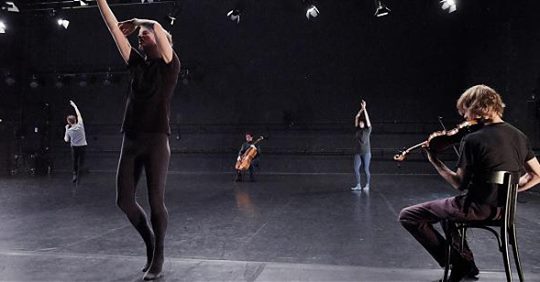
    Laurent Chétouane brings philosophy and choreography together on a level playing field. He creates an adventurous, puristic aesthetic, in which language, space and movement are set against each other. The second part of his trilogy on togetherness applies the concept of »openness«, which according to Jean-Luc Nancy resists any kind of definition. Chétouane transfers this idea to community and dance. Performing to live music from Nico Muhly and Domenico Gabrielli, four dancers develop constellations and encounters. Following the pluralistic approach to openness, they seek out possibilities for a diverse community.

    Dance: Matthieu Burner, Mikael Marklund, Senem Gökçe Oğultekin, Sigal Zouk

    Music: Emmanuelle Bernard (Violine und Bratsche), Mathias Halvorsen (Klavier), Tilman Kanitz/Michael Rauter (Cello), Nico Muhly, Domenico Gabrielli

    Choreografie: Laurent Chétouane

    Kostüme: Sophie Reble

    Dramaturgie: Leonie Otto

    Lights: Stefan Riccius

    Choreografie: Leonie Rodrian

    Patricia Brülhart, Kerstin Wagner, Christine Kammer (Büro Tom Stromberg), Hendrik Unger

    Eine Koproduktion von Tanzquartier Wien, Les Substistances (Lyon), PACT Zollverein Essen, HAU Hebbel am Ufer Berlin, gefördert von: Basisförderung Berlin/ Der Regierende Bürgermeister von Berlin – Senatskanzlei – Kulturelle Angelegenheiten und vom Fonds Darstellende Künste e.V./3-jährige Konzeptionsförderung aus Mitteln des Bundes

    Mit freundlicher Unterstützung von Dock11/Eden*****Berlin[/vc_column_text][/vc_column][/vc_row]
  • MUD

    MUD

    [vc_row][vc_column width=”1/3″ animation=”wpb_bottom-to-top”][vc_column_text]

    Voice: Iza Mortag Freund
    Elektronik: Ole Brolin
    Cello: Michael Rauter, Tilman Kanitz
    Artistic Director: Tilman Kanitz

    [/vc_column_text][/vc_column][vc_column width=”2/3″ animation=”wpb_bottom-to-top” offset=”vc_hidden-xs”][vc_single_image image=”202″ img_size=”full” add_caption=”yes”][/vc_column][/vc_row]