Category: Happening

  • Eden I

    Eden I

    [vc_row][vc_column][vc_column_text]Video: click and watch


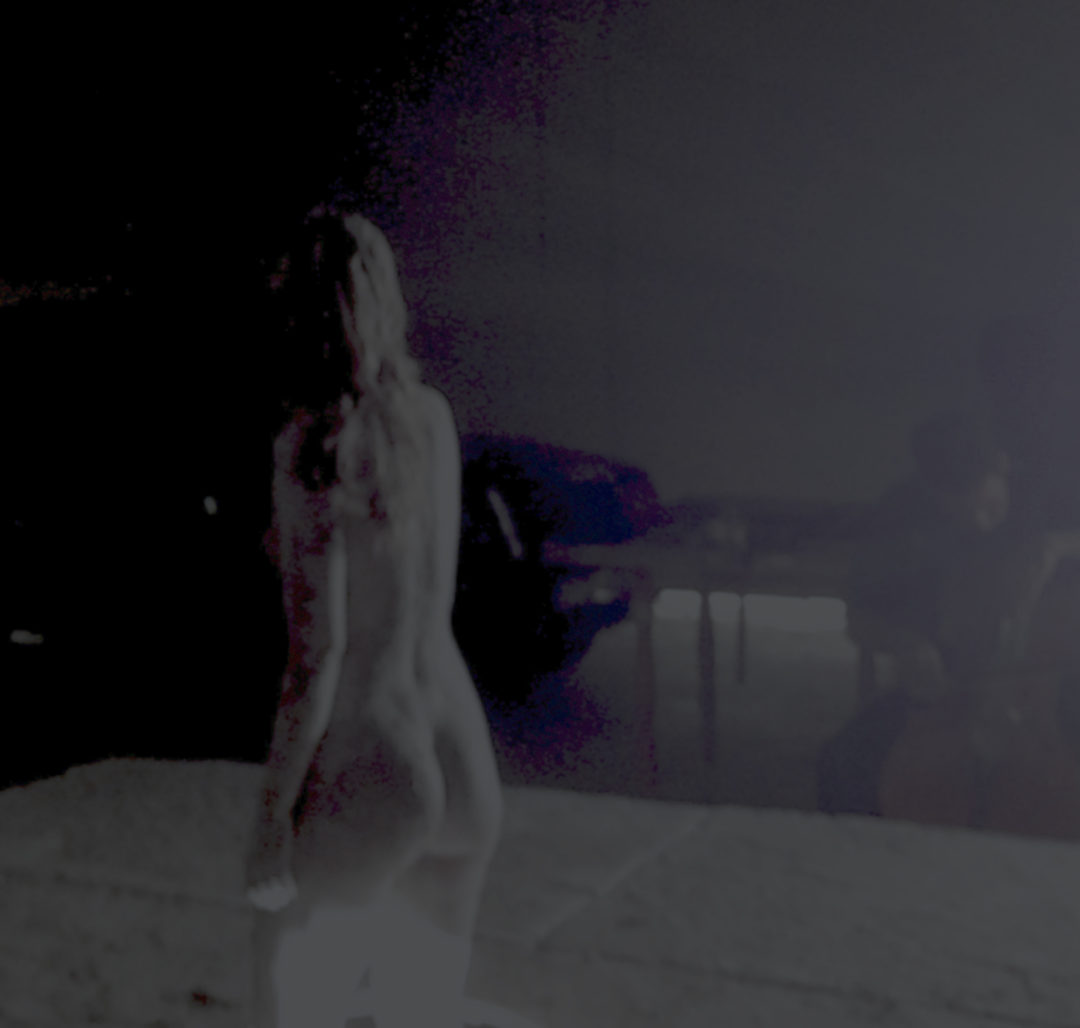
    Something is lost here. There are many things that are obviously lost. Having a nice and affordable place to live in, for example, or strong unions. But it’s not that, it’s something else. It has left us in such a determined way, that it is impossible to say what that thing was, that got lost. It can’t have happened long ago. Maybe just five years, or twenty.
    Something is lost here, and we don’t know what it is. What was the thing that is now lacking? Was it subtle and fragile? We don’t know. We circle around that lack, follow its traces, trying to find out, how it came into being. Why did we start lacking it, and how? Through studying the story of this loss, we hope to get a feeling of what that thing could have been.

    Tilman Kanitz and Niklas Draeger teamed up with stage and costume designer Anna Philippa Müller and co-choreographers Frank Willens, Ixchel Mendoza and Shade Théret, to explore this loss in a spatial experiment: How to relate to the space we are in? How do environments support human relations, or evaporate them? How can we embody space? How do environments disperse or swallow sound? How can we listen to the surrounding sounds, what can we add, and how does this addition support or transform what is already there? How can we be together?

    CREDITS

    Concept, Direction & Choreography: Tilman Kanitz & Niklas Draeger
    Costume & Stage: Anna Philippa Müller
    Co-Choregraphy: Frank Willens, Ixchel Mendoza and Shade Théret
    Music: John Dowlan (Fantasia for Lute solo, Flow my tears for Lute and Voice), Ernstalbrecht Stiebler (Dd for Cello solo, Im Takt for Bongos), Tilman Kanitz (lines 1, vers. 1+2 for Cello solo), Ernstalbrecht Stiebler (organ flute), Alexander Iezzi (Bongos), Pedro Alcacer Doria (Lute), Tilman Kanitz (Cello)
    Dramaturgy: Niklas Draeger
    Dramaturgical consultancy: Chloe Firouzian

    With: Pedro Alcacer Doria, Ernstalbrecht Stiebler, Alexander Iezzi, Tilman Kanitz, Ixchel Mendoza, Shade Théret, Frank Willens, Elijas Willens, Niklas Draeger

    Artistic realisation Costume: Anna Philippa Müller & Ines Dautel
    Artistic realisation stage design bus: Leander Kreissl
    Stage & costume design apprentice: Sophia Mitterhofer
    Production-Assistant: Max von Mechow

    Documentation: Amelie Kahn-Ackermann (Foto), Chloe Firouzian (Foto & Video), Arnold Trautwein (Video)

    Supported by: The NATIONALE PERFORMANCE NETZ – STEPPING OUT NPN, funded by the Federal Government Commissioner for Culture and the Media as part of the NEUSTART KULTUR. Dance Aid Programme.

    Click for full size image.[/vc_column_text][/vc_column][/vc_row][vc_row][vc_column][/vc_column][vc_column][/vc_column][vc_column][/vc_column][/vc_row][vc_row][vc_column][weston_gallery ids=”1743″][/vc_column][/vc_row]

  • Clash

    Clash

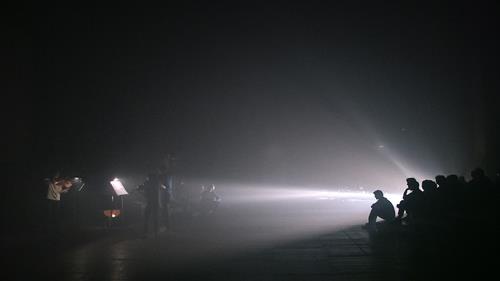
    [vc_row][vc_column width=”1/3″][vc_wp_text][/vc_wp_text][/vc_column][vc_column width=”2/3″][vc_column_text]Clash de Cartier was an experimental music theatre and fashion show, commissioned by Cartier and art-directed by Tilman Kanitz. It was held at the Eissbach Studios in Munich. The audience was separated from the stage by a 30-by-8-metre transparent foil to keep the stage filled with fog and the audience space clear. Spectators experienced a dance and music performance that appeared and disappeared into the white clouds like ever-changing, blurred tableaux vivants. The music ranged from Purcell and Handel to contemporary pop and electronic music, including a premiere by Yello.


    Credit:

    Singers: Tahnee Niboro, Antigone Papoulkas
    Violin solo: Chouchane Siranossian
    Choreographer: Frank Willens
    Artistic Director: Tilman Kanitz[/vc_column_text][/vc_column][/vc_row]

  • Fort/Da III

    Fort/Da III

    [vc_row][vc_column width=”1/3″ animation=”wpb_bottom-to-top”][vc_column_text]Artistic Director: Tilman Kanitz
    Music: Rashad Becker (UA), Lisa Bielawa, Sebastian Claren (UA), Franz Schubert, Salvatore Sciarrino, Pauline Oliveros

    Solistenensemble Kaleidoskop[/vc_column_text][/vc_column][vc_column width=”2/3″ animation=”wpb_bottom-to-top” offset=”vc_hidden-xs”][vc_single_image image=”1085″ img_size=”full” add_caption=”yes”][/vc_column][/vc_row][vc_row][vc_column width=”1/3″][/vc_column][vc_column width=”2/3″][vc_column_text]FORT/DA III

    In the third part of the FORT/DA series, Tilman Kanitz goes back to the future. He refers to and remixes his piece Impossibility II from 2016. Unbox (Clear Skies Remix) is a labyrinth of sound and vision in which the audience wanders, gets lost and unexpectedly encounters the beauty of music by Salvatore Sciarrino, Lisa Bielawa, Franz Schubert, Sebastian Claren and Pauline Oliveros in fog chambers.

    Tilman Kanitz works with the technique of remixing: The parameters of the concerto format are constantly rearranged. They are fossilised and fragmented, leading the audience to individual encounters with their own listening, thinking and perception of music. Before this journey into the unknown begins, the first part of the show features Rashad Becker’s music and a choreography by the performers: a pre-echo of what has not yet happened.

    A project by Solistenensemble Kaleidoskop in cooperation with RADIALSYSTEM V and funded by the Senate Department for Culture and Europe.

    Composition commissions to Rashad Becker and Sebastian Claren, funded by the Ernst von Siemens Music Foundation.[/vc_column_text][vc_column_text]

    Retrospective by Martin Hufner, New Music Magazine, July 11, 2018
    Complicity in the Fog – The Solistenensemble Kaleidoskop at Radialsystem V in Berlin

    The Solistenensemble Kaleidoskop doesn’t perform “normal” concerts. It “performs.” That means it tailors its concert dramaturgy with precision to the works and their combination in spatial and acoustic contexts. Sometimes this works better, sometimes worse. At their evening performance “Fort / Da III – Unboxed (Clear Sky Remix)”, art-directed by Tilman Kanitz, everything fell into place.

    The title is perhaps more confusing than clarifying. Still, it brings the concept into linguistic fashion and psychoanalytic branching (“Fort / Da” reference: Sigmund Freud, Beyond the Pleasure Principle), “Remix” (DJ culture), and “Unboxed” (the public unboxing of purchased or gifted items). You can engage with the performance even without deciphering the peculiar title.

    At the beginning, the audience enters the large hall of Berlin’s Radialsystem V. White stools are scattered randomly throughout the space, along with a few chairs at the edges. The lighting is a neutral white, almost clinical, in an unadorned room.

    Impulse
    At the console stands Rashad Becker, premiering his work o.T. through loudspeakers. Scattered among the stools are several female musicians from the ensemble, physically resonating with the tangle of tonal and sonic impulses, moving their instruments to varying degrees. One waits—and is already immersed. The sounds themselves are also rather sober; you hear a hint of fundamental tonal grounding, and toward the end, the texture thins out. Microtonal beatings seem more preparatory than complete in themselves. As the piece fades, the musicians exit through a side door—not without signaling that the audience should follow. Something like fog seeps from the doorway.

    Fog
    Then you step through the door into a space illuminated again by white light from above and partly from the floor. A fog limits visibility to barely more than three meters, diffusing the light and making it soft—yet simultaneously eerie. The true size of the room becomes unknowable. Hanging from ceiling to floor are translucent white sheets, creating a maze-like structure. Coupled with the limited visibility, this can feel quite oppressive—perhaps even provoke claustrophobic sensations. But the balance of light and spatial impression seems right. Only the floor, made of dark-structured wood, might slightly disturb the concept.

    In this space, one searches for something—or perhaps for nothing. People move as if in a liminal realm. A few stools can be spotted, here and there. Some people sit, some don’t. Some stand, lie down, or wander. After a brief period of (dis)orientation, Salvatore Sciarrino’s Ai limite della notte (1979) for solo viola (Ildikó Ludwig) begins to sound from somewhere: “At the Edge of the Night” — on the boundaries of the audible. On the edge of visibility. Breathing sounds (?) are heard from elsewhere. Footsteps from those still searching the space create their own peculiar rhythm. Nothing feels concrete; much remains vague.

    Disintegration
    Next, passages from Franz Schubert’s String Trio in B-flat major, D. 581, sound through the space, with the musicians spread out. The atmosphere becomes quiet and calm. These Schubert fragments, which disintegrate as they unfold (the music unravels), immediately bind the listener’s attention—and simultaneously frustrate it. This occurs about five times, with brief starts and sudden breakdowns of the Schubert material.

    Then, Lisa Bielawa’s Finally (from Kafka Songs, 2001–2003) for voice and violin cuts sharply and playfully through the space. It has a folk-like character in this context, reminiscent of a hunt scene.

    Focus
    Loud string slaps mark the 30–45 minute-long world premiere of Sebastian Claren’s Saturn A for solo cello (Tilman Kanitz). A work involving a vast array of sound production techniques. Now, the evening’s concept fully coalesces: the fog, the curtains, the previous pieces—all of it changes the mode of listening. The acoustic focus shifts. Curiosity is unleashed in the audience, prompting them to move in search of the sound source. For others—like myself—it triggers a new kind of concentrated listening. It’s hard to say how much the fog alters the acoustics, but the piece becomes a study in extraordinary sound production on this instrument—one you might not even recognize as a cello without visual confirmation.

    In contrast to the cello’s cultural-historical sound image, this piece fills the space with crunching, impulsive, and other unconventional sounds. It subtly ties back to Rashad Becker’s electroacoustic opening—intentionally or not, it doesn’t matter.

    This concept works especially well when imagined in a traditional context: musician on stage, audience in seats. Such a confrontation would suggest voyeurism or a focus on virtuosity—present or absent. But in the foggy whiteness of Radialsystem, one feels like a complice of the music itself—if not part of it—in a different physical state, so to speak. That’s what it means when performance and work merge. And it works! The whole process becomes a kind of théâtre instrumental concret.

    The transition to the next section begins during Claren’s piece, as the other musicians drag their bow frogs across the floor, tearing down parts of the space-defining curtains, reshaping the space with plastic bundles. Schubert’s trio returns, progressing slightly further and at a “proper” tempo, yet never fully realized—repeatedly breaking off—while another musician gleefully hops through the space, among her colleagues and the audience. Schubert’s music lives on afterward, until finally, the performers themselves begin to dance.

    Complex Complices
    Then, almost offhandedly, comes the ending: Pauline Oliveros’s Song for Margrit (1997) for voice. “I am listening to you” is the brief text of this piece, meant to react directly to the presence of the audience. Simple on the surface, yet it shows that the audience is indeed part of the staging. Its complicity is constructed by the dramaturgy and is indispensable—acoustically, through their movements; visually, as a walking sculpture in motion; even in the shadows cast on the curtains. The peculiar muffled nature of the space, in which people disappear and reappear, becomes a total product. Without the audience, from an “objective” bird’s-eye view, none of it would make sense. Everything came together.

    Loud applause from the roughly 50-member audience for the musicians of the Solistenensemble Kaleidoskop, for the spatial concept (Tilman Kanitz, Arnaud Poumarat [also lighting], and Lyllie Rouvière [also choreography]), and for the entire team.

    Currently Informed Music Practice
    While many performances often feel like artificial overlays, the Solistenensemble Kaleidoskop’s productions are entirely thought through—everything is inseparably interwoven. The last 50 years have owed much to “historically informed performance practice,” but perhaps it’s time to speak of a “currently informed” one as well. Not as a rehash of the old, but as entirely new concert experiences. Without artificially imposed or historically warmed-over fuss. The way it was done at Radialsystem V with “Fort / Da III”—that’s how it could be.

    — Deutsch —

    Komplizenschaft im Nebel – Das Solistenensemble Kaleidoskop im Berliner Radialsystem V

    Das Solistenensemble Kaleidoskop bestreitet keine „normalen“ Konzerte. Es „performt“. Das heißt, es setzt seine Konzertdramaturgie fein abgestimmt auf die Werke und ihre Kombination im räumlichen und klanglichen Zusammenhang ein. Das geht mal schlechter auf, mal besser. Bei ihrem Abend „Fort / Da III – Unboxed (Clear Sky Remix) “ hat alles gestimmt.

    Wobei der Titel wahrscheinlich eher zu verwirren vermag, als dass er etwas klärte. In jedem Fall bringt er die Sache in sprachliche Mode und psychoanalytische Verästelungen („Fort / Da“-Bezug: Siegmund Freud, Jenseits des Lustprinzips), „Remix“ (DJ-Culture) und „Unboxed“ (Öffentliches Auspacken gekaufter oder geschenkter Gegenstände). Man kann auch ohne den eigenartigen Titel an die Sache herankommen.

    Zu Anfang betritt das Publikum den großen Saal des Radialsystem V Berlin. Weiße Hocker stehen willkürlich angeordnet im Raum, auch ein paar Stühle am Rande. Nüchtern weißes, geradezu technisches Licht in einem ungeschmückten Raum.

    Impuls

    Am Pult steht Rashad Becker, der über die Lautsprecher sein Werk „o.T.“ zur Uraufführung bringt. Mittendrin im Sitzgewürfel auch einige Musikerinnen des Ensembles, sie schwingen körperlich in dem Ton- und Klangimpuls-Gewirr mit, bewegen die Instrumente dabei mehr oder weniger. Man wartet und ist mittendrin. Die Sounds sind ebenfalls eher nüchtern, ein bisschen hört man Grundtonbezogenheit, gegen Ende dünnt es aus, Schwebungen im mikrotonalen Bereich scheinen mehr zur Vorbereitung zu tönen, als für sich selbst. Nach dem Abklang verlassen die Musikerinnen den Raum durch eine Seitentür. Nicht, ohne Anzeichen zu geben, dass das Publikum doch folgen möge. Aus der Tür dringt dabei so etwas wie Nebel.

    Nebel

    Und dann geht man durch die Tür und steht in diesem Raum, der ebenfalls durch weißes Licht von oben und teilweise auch vom Boden her beleuchtet wird. Ein Nebel, der kaum eine Sicht von mehr als drei Metern zulässt dämpft das Licht, macht es diffus, weich und auch unheimlich zugleich. Die wirkliche Größe des Raumes ist auf diese Weise nicht erahnbar. Den Raum selbst teilen von der Decke bis auf den Boden hängende weiße, halbdurchsichtige Folien und erzeugen dabei das Gefühl einer labyrinthischen Raumstruktur. Zusammen mit der beschränkten Sichtweite kann das durchaus beklemmend wirken, vielleicht sogar klaustrophobische Gefühle auslösen. Offenbar stimmt aber die Lichtraumsicht-Dosis. Allein der Boden ist aus im Vergleich strukturiert dunklem Holz (denkbar, dass dies in letzter Konsequenz konzeptstörend wirkt). Man sucht in diesem Raum nach irgendetwas oder auch nichts. Die Menschen bewegen sich wie in einem Zwischenreich. Ein paar Hocker sind irgendwann und irgendwo auszumachen. Man setzt sich oder setzt sich nicht. Man steht, liegt oder geht. Nach einer kurzen (Des)Orientierungszeit erklingt von irgendwo Salvatore Sciarrino „Ai limite della notte“ von 1979 für Viola sola (Ildiko Ludwig): „An den Grenzen zur Nacht“ – an den Grenzen des Hörbereichs. An den Grenzen der Sichtbarkeit. Atemgeräusche (?) beschallen dazu von woanders. Der noch bei vielen durch den Raum suchende Trittschall erzeugt dazu einen eigensinnigen Rhythmus. Nichts wirkt konkret, vieles vage.

    Zerfall

    Danach kommen Passagen aus dem Streichtrio in B-Dur, D 581, von Franz Schubert zum Klingen, die Musikerinnen getrennt im Raum verteilt. Es wird still dabei und ruhig. Die Schubertpassagen, die im Laufe ihrer Existenz zerfallen (die Musik entfädelt sich), binden die Hörbereitschaft auf der Stelle stärker und enttäuschen sie zugleich. Es gibt etwa fünf mal so einen Kurzanlauf mit Zerfallskurve des Schubert-Textes mit gleichwohl plötzlichem Abbruch.

    Dann durchbricht, im Tonfall pointiert, klangscharf Lisa Bielawas „Finally“ (aus Kafka-Songs) von 2001-2003 für Stimme und Violine den Raum. Ein spielerisches, in diesem Zusammenhang geradezu folkloristisch anmutendes Stück nach Art einer Jagdszene.

    Fokus

    Lautes Saitenschnalzen markiert die wohl zwischen 30 und 45 Minuten andauernde Uraufführung von Sebastian Clarens „Saturn A“ für Cello solo (Tilman Kanitz). Ein Stück bei dem eine Vielzahl von Tonerzeugungsvarianten mit im Spiel sind. Jetzt geht das Konzept des Abends komplett auf: Der Nebel und die Folien und die vorhergehenden Stücke führen zu einer veränderten  Hörweise – der akustische Brennpunkt verlagert sich. Gleichzeitig setzt es im Publikum Neugier frei und bringt es in Bewegung auf der Suche nach der Klangquelle. Bei anderen – wie mir – schafft es eine neue Art konzentrierten Hörens. Wie weit der Nebel dazu auch die Raumakustik verändert hat, ist schwer zu sagen. Das Stück ist eine Studie in außerordentlicher Klangerzeugung an diesem Instrument, das man, wenn man es nicht zugleich sieht, nicht zwingend als Cello erkennen würde. Gegen den Klang seiner instrumentalen Kulturgeschichte prägt es den Raum mal mit knirschenden, bald impulsartigen Passagen und allem, was sonst möglich ist. Und klammert sich damit dann eben doch an die elektroakustische Aufführung von Rashad Becker zu Beginn. Gewollt oder ungewollt: Einerlei.

    Das Konzept geht gerade dann auf, wenn man sich dieses Stück im traditionellen Zusammenhang denken würde. Also mit Bühne für den Musiker und Saal für das Publikum. Die konfrontative Situation hätte etwas von Schaulustigkeit, von Fokussierung auf vorhandene oder abwesende Virtuosität. Im Nebelweiß des Radialsystems fühlt man sich aber eher als Komplize der Musik selbst, wenn nicht gar als ein Teil der selben – nur in einem anderen Aggregatzustand, wenn man so will. Das meint es wohl, wenn man sagt, Inszenierung und Werk verschmelzen. Und das ist gut! Das macht aus dem ganzen Vorgang ein „theatre instrumentale concrète“.

    Den Übergang zur nächsten Passage erzeugen noch während Clarens Stück die anderen Musikerinnen, wenn sie den Instrumentenbogenfrosch über den Boden nach sich ziehen, während Teile der raumbildenden und -teilenden Folien heruntergerissen werden und als Plastikknäuel den Raum nun neu formen. Wieder ertönt das Streichtrio von Schubert, etwas weitergehend und im „richtigen“ Tempo, doch nie vollständig, immer wieder doch abbrechend, während eine weitere Musikerin vergnügt durch den Raum, die Musikerinnen und das Publikum hüpft. Die Musik Schuberts ist auch danach. So dass endlich eben auch die Musizierenden mittanzen.

    Komplexe Komplizen

    Fast lapidar dann zum Ende Pauline Oliveros „Song for Margrit (1997) für Stimme. „I am listening to you“ ist der kurze Text dieses Stücks, das in konkreter Reaktion auf die Anwesenheit des Publikums reagieren soll. Lapidar einerseits, andererseits doch anzeigend, dass das Publikum dann doch auch ebenso Teil der Inszenierung ist. Seine Komplizenschaft wird durch die Dramaturgie erzeugt und ist unabdingbar: Akustisch durch seine Bewegungen, optisch als eine in Bewegung seiende Schreitskulptur, auch im Schattenwurf an den Folien. Die eigenartige Gedämpftheit des Raumes, der die Menschen verschwinden und an anderer Stelle auftauchen lässt, wird zum Totalprodukt. Ohne Publikum, zum Beispiel in einer „objektiven“ Draufsicht, ergäbe das alles keinen Sinn. Es ist alles aufgegangen.

    Großer Beifall beim etwa 50-köpfigen Publikum für die Musikerinnen des Solistenensembles Kaleidoskop, dem Raumkonzept (Tilman Kanitz, Arnaud Poumarat [auch Licht] und Lyllie Rouvière [auch Choreografie]) und dem ganzen Team.

    „Aktuell informierte Musikpraxis“

    Während man bei manchen Performances häufig genug das Gefühl hat, dass da eine Art Überstülpung probiert wird, ist bei den Aufführungen des Solistensensembles Kaleidoskop das alles im Ganzen gedacht, es ist alles untrennbar ineinandergewoben. Der „historisch informierten Aufführungspraxis“ hat man in den letzten 50 Jahren viel zu danken gehabt, es wäre nicht ganz falsch, stünde dem eine auch „aktuell informierte“ zur Seite. Gerade nicht als Aufguss alter, sondern ganz neuer Konzerterfahrungen. Ohne künstlich gesetztes oder historisch aufgewärmtes Brimborium. So wie im Radialsystem V bei „Fort / Da III“ könnte es sein.

    Ein Projekt von Solistenensemble Kaleidoskop in Kooperation mit dem RADIALSYSTEM V.
    Gefördert durch die Senatsverwaltung für Kultur und Europa. Kompositionsaufträge an Rashad Becker und Sebastian Claren, finanziert durch die Ernst von Siemens Musikstiftung.
    [/vc_column_text][/vc_column][/vc_row]

  • Fort/Da I

    Fort/Da I

    [vc_row][vc_column width=”1/3″ animation=”wpb_bottom-to-top”][vc_column_text]Artistic Director: Tilman Kanitz

    Music: César Franck, Michael von Biel, Giacinto Scelsi, Phillip Enders (Premiere), Francisco Guerrero, Philip Glass

    Solistenensemble Kaleidoskop[/vc_column_text][/vc_column][vc_column width=”2/3″ animation=”wpb_bottom-to-top” offset=”vc_hidden-xs”][vc_single_image image=”306″ img_size=”full” add_caption=”yes”][vc_column_text]FORT/DA I

    FORT/DA I begins with fluid and abrupt changes between physical proximity and distance. Stage and auditorium are one. They suggest an island world. César Franck and Philip Glass’ string quartet are the sounds of the sirens that whirl the audience into new dimensions in a production created by Tilman Kanitz.

    Artistic and Music Director: Tilman Kanitz
    Choreografie: Philipp Enders

    Musik: César Franck, Philip Glass, Giacinto Scelsi, Philipp Enders, Michael van Biel

    Solistenensemble Kaleidoskop[/vc_column_text][/vc_column][/vc_row][vc_row][vc_column width=”1/3″][/vc_column][vc_column width=”2/3″][/vc_column][/vc_row]

  • Bajazzo Road Opera

    Bajazzo Road Opera

    [vc_row][vc_column width=”1/3″ animation=”wpb_bottom-to-top”][vc_column_text]by Ludger Engels, Tilman Kanitz, Thomas Mahmoud
    Music: Ruggero Leoncavallo, Tilman Kanitz, Thomas Mahmoud
    Director: Ludger Engels
    Musical Directors: Tilman Kanitz, Thomas Mahmoud

    Solistenensemble Kaleidoskop[/vc_column_text][/vc_column][vc_column width=”2/3″ animation=”wpb_bottom-to-top” offset=”vc_hidden-xs”][vc_single_image image=”769″ img_size=”full” add_caption=”yes” onclick=”link_image”][vc_column_text]

    Bajazzo Road Opera

    125 years after the premiere of Pagliacci (The Clowns), Ruggero Leoncavallo’s verismo opera receives a postdramatic reimagining—of all places, inside Berlin’s Kudamm Karree. Here, along the bustling Kurfürstendamm, a peculiar tangle of performed and lived realities collides: the layered histories of theatre and city, the silent decay of abandoned buildings, swarms of construction plans, dashed hopes and soaring promises for the future, the glitter of ostentatious consumerism, streams of wide-eyed tourists, and wary local residents—all interlocking and overlaying each other. It is precisely within this urban palimpsest that Bajazzo Road Opera by Ludger Engels, Tilman Kanitz, and Thomas Mahmoud unfolds.

    An Italian opera staple as raw material for Kaleidoskop—an ensemble renowned for its genre-blurring music projects?

    At its core, the story is brief and tragic: a play about jealousy collapses into real violence on the same stage—Pagliaccio, the tragic clown, murders the love of his life, his world in ruins. For audiences in 1892, this collision of everyday life with the theatre’s fictive realm was a shock, challenging the stage as a separate sphere of illusion. “The tears of the stage are false,” warns the Prologue.

    Bajazzo Road Opera takes up this rupture and transposes it into an abandoned shopping mall, transforming it into a musical performance that blurs the boundary between theatre and reality. Pagliaccio dissolves in a whirlpool of media and fragmented perception.

    Thomas Mahmoud serves as the voice and gaze of this lost figure—an exhausted, residual fragment. The performers of Solistenensemble Kaleidoskop each embody an emotional state within Pagliaccio’s shattered psyche. He encounters himself in these splinters like reflections in a hall of mirrors, drifting through corridors and hidden rooms in the Kudamm Karree, wandering Berlin’s night streets, unwillingly pulled into the underworld of feelings he neither understands nor controls—yet obeys. Pagliaccio remains his own greatest enigma and his own undoing.

    Unfolding slowly over extended sequences, Bajazzo Road Opera is a music-theatre gesamtkunstwerk that meanders for a total of 48 hours. The sonic and visual material generated during these performances forms the basis for an installation open to daytime visitors. Individual performances and video streams become modular building blocks from which each audience member can construct their own theatrical journey—welcoming those who drop in at various times to watch, listen, and feel, as well as those who choose to follow “on the road” with this modern troupe of itinerant clowns.

    Bajazzo Road Opera

    by Ludger Engels, Tilman Kanitz, Thomas Mahmoud

    Direction: Ludger Engels

    Musical Direction: Thomas Mahmoud, Tilman Kanitz

    Dramaturgy: Roland Quitt

    Costume Design: Pam Hogg / Couture

    Video Design: Rodrik Biersteker

    Sound Design: Ole Brolin, Florian Fischer

    Lighting & Technical Direction: Jurgen Kolb

    Assistant Director: Jan Maagh

    Costume Assistance: Nora Scheve

    Cameras: Eva Pisana, Stephan Talneau

    Design: Benjamin Pollach

    Photography: Sebastian Mayer

    Press & PR: k3 berlin – Kontor für Kultur und Kommunikation

    Music & Performance: Thomas Mahmoud, Solistenensemble Kaleidoskop

    Music: Ruggero Leoncavallo Pagliacci (1892), Tilman Kanitz, Thomas Mahmoud

    Solo Performance Music: Ludger Engels, Solistenensemble Kaleidoskop

    A production by Solistenensemble Kaleidoskop. Supported by Hauptstadtkulturfonds and the Berlin Senate Department for Culture and Europe.


    Bajazzo Road Opera

    125 Jahre nach der Uraufführung der Oper Pagliacci (Der Bajazzo) erfährt die veristische Oper von Ruggero Leoncavallo ausgerechnet im Berliner Kudamm Karree ein postdramatisches Update. Dort am Kurfürstendamm, wo sich gerade und wieder einmal gefühlte, gespielte und tatsächliche Realitäten – Theater- und Stadtgeschichte(n), die stille Ödnis des Verfalls und Massen von Bauplänen, enttäuschte Hoffnungen und hochfliegende Zukunftserwartungen, das Glitzern protzigen Konsums, staunende Touristenschwärme und zweifelnde Anwohner – ineinander verhaken und einander überlagern, nimmt Bajazzo Road Opera von Ludger Engels, Tilman Kanitz und Thomas Mahmoud ihren Ausgang.

    Ein Repertoireliebling der italienischen Oper als Spielmaterial von Kaleidoskop, wohlbekannt und renommiert für seine genreübergreifenden Musikprojekte?

    Die eigentliche Geschichte ist kurz und tragisch. Aus dem Eifersuchtstheaterspiel wird am selben Ort blutige Realität, der Bajazzo – der tragische Clown – tötet die Liebe seines Lebens, seine Existenz liegt in Trümmern. Der Einbruch der Alltagswelt auf die Bühne stellte für das damalige Publikum von Pagliacci Theater als getrennte Erlebenssphäre schockartig in Frage. „Die Tränen der Bühne sind falsch“, heißt es im Prolog.

    Bajazzo Road Opera greift diese Situation auf und transformiert sie in einer verlassenen Shopping Mall zu einer musikalischen Performance, die die Grenzen zwischen Theater und Wirklichkeit verwischt. Bajazzo löst sich auf im medialen Strudel.

    Thomas Mahmoud ist Stimme und Auge dieses Verlorenen, ein letztes, erschöpftes Fragment. Die PerformerInnen des Solistenensemble Kaleidoskop verkörpern jeweils einen emotionalen Zustand der zersplitterten Existenz der Figur des Bajazzo. Er begegnet sich in diesen Splittern wie im Spiegel, streift durch Gänge und Räume im Kudamm Karree, irrt über nächtliche Straßen der Stadt, gerät gegen seinen eigenen Willen in den Strudel der Unterwelt seiner Gefühle, die er nicht kennt – denen er aber gehorcht. Der Bajazzo ist sich selbst das größte Rätsel und wird sich selbst zuviel.

    Bajazzo Road Opera entfaltet sich langsam und über gedehnte Verläufe. Insgesamt 48 Stunden dauert dieses musiktheatral mäandernde Gesamtkunstwerk. Aus dem klanglichen und visuellen Material der Aufführungen entsteht eine Installation, die tagsüber besucht werden kann. Die einzelnen Performances und Videostreams sind die Module, aus denen sich das Publikum seine eigene theatrale Erlebniswelt zusammensetzen kann. Offen für Zuschauer, die zu unterschiedlichen Zeiten ein- oder mehrfach hereinschauen, hören und fühlen möchten, und für solche, die sich ‚on the road‘ begeben mit einer Truppe fahrender Komoödianten der Jetztzeit.


    Bajazzo Road Opera

    von Ludger Engels, Tilman Kanitz, Thomas Mahmoud

    Regie: Ludger Engels
    Musikalische Leitung: Thomas Mahmoud, Tilman Kanitz
    Dramaturgie: Roland Quitt
    Kostüm: Pam Hogg/Couture
    Videodesign: Rodrik Biersteker
    Sounddesign: Ole Brolin, Florian Fischer
    Licht und technische Leitung: Jurgen Kolb
    Regieassistenz: Jan Maagh
    Kostümmitarbeit und Assistenz: Nora Scheve
    Kameras: Eva Pisana, Stephan Talneau

    Gestaltung: Benjamin Pollach
    Fotografie: Sebastian Mayer
    Pressearbeit: k3 berlin – Kontor für Kultur und Kommunikation

    Musik und Performance: Thomas Mahmoud, Solistenensemble Kaleidoskop

    Musik: Ruggero Leoncavallo Pagliacci, 1892, Tilman Kanitz und Thomas Mahmoud

    Musik Soloperformances: Ludger Engels, Solistenensemble Kaleidoskop

    Eine Produktion von Solistenensemble Kaleidoskop. Gefördert durch den Hauptstadtkulturfonds und die Senatsverwaltung für Kultur und Europa.[/vc_column_text][/vc_column][/vc_row][vc_row][vc_column][vc_empty_space height=”60px”][vc_column_text][/vc_column_text][/vc_column][/vc_row][vc_row][vc_column width=”1/3″][/vc_column][vc_column width=”2/3″][vc_column_text css=”.vc_custom_1550915477374{border-bottom-width: 1px !important;border-bottom-color: #000000 !important;border-bottom-style: solid !important;}”]Rehearsal 1 & 2[/vc_column_text][vc_row_inner][vc_column_inner width=”1/2″][vc_wp_text][/vc_wp_text][/vc_column_inner][vc_column_inner width=”1/2″][/vc_column_inner][/vc_row_inner][vc_empty_space height=”30px”][/vc_column][/vc_row][vc_row][vc_column width=”1/3″][/vc_column][vc_column width=”2/3″][vc_column_text css=”.vc_custom_1550915492657{border-bottom-width: 1px !important;border-bottom-color: #000000 !important;border-bottom-style: solid !important;}”]Teaser[/vc_column_text][vc_wp_text][/vc_wp_text][vc_wp_text][/vc_wp_text][/vc_column][/vc_row][vc_row][vc_column width=”1/3″][/vc_column][vc_column width=”2/3″][/vc_column][/vc_row]

  • Omöoohno…

    Omöoohno…

    [vc_row][vc_column width=”1/3″ animation=”wpb_bottom-to-top”][vc_column_text]

    Music: Thomas Mahmoud, Tilman Kanitz, Michael Rauter, Jan St. Werner

    [/vc_column_text][/vc_column][vc_column width=”2/3″ animation=”wpb_bottom-to-top” offset=”vc_hidden-xs”][vc_single_image image=”238″ img_size=”full” add_caption=”yes”][/vc_column][/vc_row][vc_row][vc_column][vc_column_text]

    omöohhhnopahtuuontudonthose

    omöohhhnopahtuuontudonthose is a performative arc of tension composed of multiple self-contained compositional units. Just as the title itself oscillates—shifting in meaning depending on dialect and artistic viewpoint—the content fluctuates between dissolution and coherence.

    Starting from a short poem by Jan St. Werner, the quartet weaves together various compositions, both original and borrowed, into a multimedia performance. Video, electronics, fashion, and excerpts from Oswald Wiener’s Die Verbesserung von Mitteleuropa, interpreted by Thomas Mahmoud, intertwine with compositions by Michael Rauter, Jan St. Werner, Tilman Kanitz, Thomas Mahmoud, and Stefan Streich. Together, they form a sedately confrontational excursion into the complex language of modern post-interdisciplinarity.

    “Here, alone, beneath the vast dome of the pure sky, I dreamed of a burning sun in which nothing stood apart, in which nothing endured, yet nothing ended— as if destruction, before its work was done, destroyed itself.”


    Artists:
    Jan St. Werner — electronics, video
    Michael Rauter — cello, video
    Tilman Kanitz — cello, fashion
    Thomas Mahmoud — voice, electronics

    –

    Mulitimediaperformance mit Stimme, Celli, Elektronik, Video, Stoff, Text und Farbe

    omöohhhnopahtuuontudonthose ist einen performativen Spannungsbogen, der aus mehreren, für sich stehenden kompositorischen Einheiten besteht. So wie der Titel der Aufführung oszilliert auch ihr Inhalt je nach Dialekt und künstlerischer Perspektive zwischen Auflösung und Stringenz. Ausgehend von einem kurzen Gedicht Jan St. Werners wird das Quartett verschiedene Kompositionen eigener und fremder Herkunft in einer mulitimedialen Aufführung verbinden. Videos, Elektronik, Mode und Texte aus Oswald Wieners Die Verbesserung von Mitteleuropa, interpretiert von Thomas Mahmoud sowie Kompositionen von Michael Rauter, Jan St. Werner, Tilman Kanitz, Thomas Mahmoud und Stefan Streich verbinden sich zu einer sediert offensiven Exkursion in die komplexe Sprache der modernen Postinterdisziplinarität.

    „Hier, allein, unter der ungeheuren Wölbung des reinen Himmels, träumte ich von einer glühenden Sonne, darin nichts Gesondertes bestand, darin nichts dauerte, aber auch nichts endete, als ob die Zerstörung, bevor ihr Werk getan, sich selbst zerstörte.“

    Jan St. Werner – Elektronik, Video I Michael Rauter – Cello, Video I Tilmann Kanitz – Cello, Mode I Thomas Mahmoud – Stimme, Elektronik

    [/vc_column_text][/vc_column][/vc_row]

  • PALIMPSEST

    PALIMPSEST

    [vc_row][vc_column width=”1/3″ animation=”wpb_bottom-to-top”][vc_column_text]Solistenensemble Kaleidoskop
    Voice: Iza Mortag Freund
    Sound: Ole Brolin, Tilman Kanitz 
    Artistic Director: Tilman Kanitz[/vc_column_text][/vc_column][vc_column width=”2/3″ animation=”wpb_bottom-to-top” offset=”vc_hidden-xs”][vc_single_image image=”226″ img_size=”full” add_caption=”yes” onclick=”link_image”][/vc_column][/vc_row][vc_row][vc_column][vc_column_text]

    Unlimited Capacity for Recording and the Preservation of Lasting Traces

    A performance with Iza Mortag Freund, BASMNR, and Solistenensemble Kaleidoskop at Schinkel Pavillon

    Following Mud and Decay, Tilman Kanitz continues his exploration of overwriting, transparency, and the simultaneity of past and present thoughts and emotions in Palimpsest. While Decay investigated the boundaries of the unspeakable, Palimpsest addresses the utopian notion of the self and its inevitable disintegration.

    Visually, this process is evoked through a staged intervention within Eva Kotátková’s exhibition Anatomical Orchestra. This quasi-static moment is sustained by the music of Dufay alongside works by Mathias Spahlinger, Mark Andre, Peter Ablinger, and Christoph Herndler.

    The acoustic skeleton of Palimpsest is an electronic composition by BASMNR (Ole Brolin and Tilman Kanitz). It drifts through the infinity of white noise, dissolves into the microtonally organized textures and noise of the contemporary works, and resurfaces within the music of Dufay.

    Violin: Anna Faber
    Viola: Justin M. Caulley
    Cello: Tilman Kanitz
    Theorbo: Magnus Andersson
    Sculptures: Eva Kotátková
    Performance: Iza Mortag Freund
    Electronics: Ole Brolin
    Concept & Art Direction: Tilman Kanitz

    –

    Unbegrenzte Aufnahmefähigkeit und Erhaltung von Dauerspuren

    Eine Performance mit Iza Mortag Freund, BASMNR und Solistenensemble Kaleidoskop im Schinkel Pavillon

    Nach Mud und Decay setzt sich Tilman Kanitz in Palimpsest mit dem Überschreiben, dem Durchscheinen und der Gleichzeitigkeit vergangener und gegenwärtiger Gedanken und Emotionen auseinander. Ging es in Decay um das Ausloten des Unsagbaren, behandelt Palimpsest die utopische Vorstellung des eigenen Selbst und deren Zerfall.

    Visuell wird dieser Prozess in einer szenischen Andeutung auf der Bühne Eva Kotatkovas‘ Ausstellung Anatomical Orchestra gezeigt. Getragen wird dieser quasi statische Moment durch Musik Dufays und Werke der Komponisten Mathias Spahlinger, Marc Andre, Peter Ablinger und Christoph Herndler.

    Das akustische Skelett von Palimpsest ist eine elektronische Komposition von BASMNR (Ole Brolin/Tilman Kanitz). Sie bewegt sich durch die Unendlichkeit des White Noise, verschwindet hinter den mikrotonal organisierten Rausch- und Geräuschklängen der zeitgenössischen Werke, und taucht mit der Musik Dufays wieder auf.

    Violine: Anna Faber
    Viola: Justin M. Caulley
    Violoncello: Tilman Kanitz
    Theorbe: Magnus Andersson
    Skulpturen: Eva Kotatkova
    Performance: Iza Mortag Freud
    Elektronik: Ole Brolin
    Concept, Artistic Direction: Tilman Kanitz

    [/vc_column_text][/vc_column][/vc_row]

  • DECAY

    DECAY

    [vc_row][vc_column width=”1/3″ animation=”wpb_bottom-to-top”][vc_column_text]Performance: Iza Mortag Freund, Michael Rauter, Tilman Kanitz
    Sound: Ole Brolin, Tilman Kanitz
    Sculptures: Eva Kotatkova
    Artistic Director: Tilman Kanitz

    [/vc_column_text][/vc_column][vc_column width=”2/3″ animation=”wpb_bottom-to-top” offset=”vc_hidden-xs”][vc_single_image image=”212″ img_size=”full” add_caption=”yes” onclick=”link_image”][vc_column_text][/vc_column_text][/vc_column][/vc_row][vc_row][vc_column][vc_column_text]

    Decay

    fuck life

    Inspired by Eva Kotátková’s vision of an abandoned spa pavilion and the spa town as a mental borderland, the Schinkel Pavillon Berlin becomes, in Decay, a site of disintegration and deconstruction.

    Iza Mortag Freund is situated within a centrally placed sculpture by Eva Kotátková, immersed in a state of recollection—the exhibition space transforms into an interior landscape observed by the performer. At an extreme slowness, the decay of the opening music unfolds; the performer, as a lone witness to the ever-expanding sonic space, interrupts this process at its moment of maximal resonance with Samuel Beckett’s Rockaby.

    Kotátková’s sculptures are treated as resonant bodies, played with bows to produce elongated tones and noise textures—lines that measure and shape the acoustic space. Within the sculpture, the performer becomes a projection surface for the audience’s associations and emotions.

    Decay dissolves through a deconstruction of the Largo from Bach’s Double Concerto for Two Violins and the final words from Beckett’s Rockaby, fading into white noise.

    –

    Ausgehend von Eva Kotatkovas Vorstellung eines verlassenen Kurmusikpavillons und dem Kurort als einem mentalen Grenzort, wird der Schinkel Pavillon in Decay zu einem Ort des Verfalls und der Dekonstruktion.

    Iza Mortag Freund befindet sich in einer zentral positionierten Skulptur Eva Kotatkovas und erinnert sich – der Ausstellungsraum wird zur Innenwelt, die von der Performerin betrachtet wird. In größter Langsamkeit entfaltet sich der Verfall der Eingangsmusik; die Betrachterin des sich beständig vergrößernden Raumes unterbricht diese Entwicklung im Moment der maximalen klanglichen Expansion mit Samuel Becketts Rockaby.

    Die Skulpturen Eva Kotatkovas werden als Klangkörper behandelt und mit Bögen bespielt. Die dabei entstehenden lang gezogenen Töne und Rauschklänge sind Linien, die den Klangraum gleichsam vermessen. Dabei wird die sich in der Skulptur befindende Performerin zur Projektionsfläche der Assoziationen und Emotionen des Publikums.

    Decay löst sich mit einer Dekonstruktion von Bachs Largo aus dem Doppelkonzert für zwei Violinen und den letzten Worten aus Beckets Rockaby auf und endet in weißem Rauschen.[/vc_column_text][/vc_column][/vc_row]
  • MUD

    MUD

    [vc_row][vc_column width=”1/3″ animation=”wpb_bottom-to-top”][vc_column_text]

    Voice: Iza Mortag Freund
    Elektronik: Ole Brolin
    Cello: Michael Rauter, Tilman Kanitz
    Artistic Director: Tilman Kanitz

    [/vc_column_text][/vc_column][vc_column width=”2/3″ animation=”wpb_bottom-to-top” offset=”vc_hidden-xs”][vc_single_image image=”202″ img_size=”full” add_caption=”yes”][/vc_column][/vc_row]