[vc_row][vc_column width=”1/3″ animation=”wpb_bottom-to-top”][vc_column_text]Performance: Iza Mortag Freund, Michael Rauter, Tilman Kanitz
Sound: Ole Brolin, Tilman Kanitz
Sculptures: Eva Kotatkova
Artistic Director: Tilman Kanitz
[/vc_column_text][/vc_column][vc_column width=”2/3″ animation=”wpb_bottom-to-top” offset=”vc_hidden-xs”][vc_single_image image=”212″ img_size=”full” add_caption=”yes” onclick=”link_image”][vc_column_text][/vc_column_text][/vc_column][/vc_row][vc_row][vc_column][vc_column_text]
Decay
fuck life
Inspired by Eva Kotátková’s vision of an abandoned spa pavilion and the spa town as a mental borderland, the Schinkel Pavillon Berlin becomes, in Decay, a site of disintegration and deconstruction.
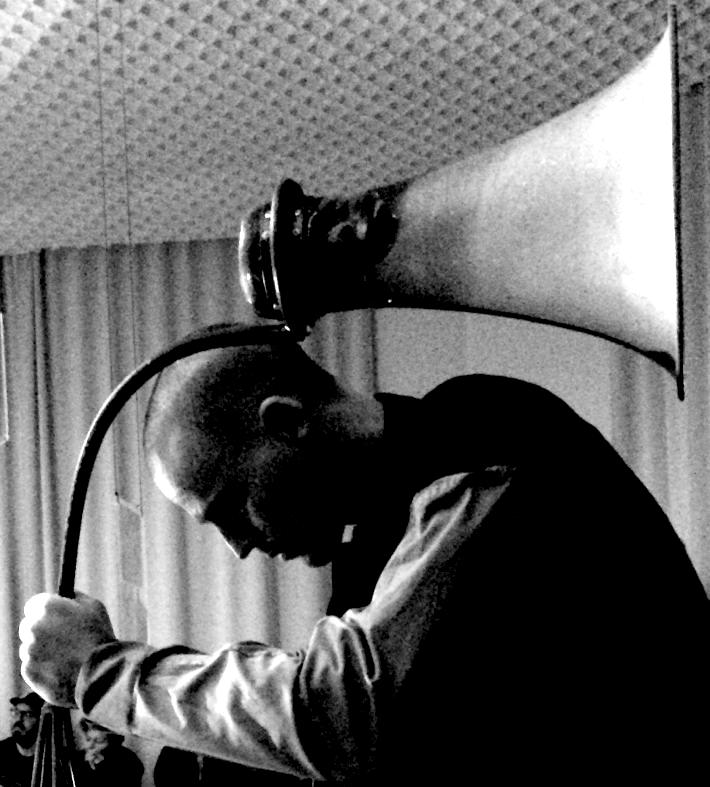
Iza Mortag Freund is situated within a centrally placed sculpture by Eva Kotátková, immersed in a state of recollection—the exhibition space transforms into an interior landscape observed by the performer. At an extreme slowness, the decay of the opening music unfolds; the performer, as a lone witness to the ever-expanding sonic space, interrupts this process at its moment of maximal resonance with Samuel Beckett’s Rockaby.
Kotátková’s sculptures are treated as resonant bodies, played with bows to produce elongated tones and noise textures—lines that measure and shape the acoustic space. Within the sculpture, the performer becomes a projection surface for the audience’s associations and emotions.
Decay dissolves through a deconstruction of the Largo from Bach’s Double Concerto for Two Violins and the final words from Beckett’s Rockaby, fading into white noise.
–
Ausgehend von Eva Kotatkovas Vorstellung eines verlassenen Kurmusikpavillons und dem Kurort als einem mentalen Grenzort, wird der Schinkel Pavillon in Decay zu einem Ort des Verfalls und der Dekonstruktion.
Iza Mortag Freund befindet sich in einer zentral positionierten Skulptur Eva Kotatkovas und erinnert sich – der Ausstellungsraum wird zur Innenwelt, die von der Performerin betrachtet wird. In größter Langsamkeit entfaltet sich der Verfall der Eingangsmusik; die Betrachterin des sich beständig vergrößernden Raumes unterbricht diese Entwicklung im Moment der maximalen klanglichen Expansion mit Samuel Becketts Rockaby.
Die Skulpturen Eva Kotatkovas werden als Klangkörper behandelt und mit Bögen bespielt. Die dabei entstehenden lang gezogenen Töne und Rauschklänge sind Linien, die den Klangraum gleichsam vermessen. Dabei wird die sich in der Skulptur befindende Performerin zur Projektionsfläche der Assoziationen und Emotionen des Publikums.
Decay löst sich mit einer Dekonstruktion von Bachs Largo aus dem Doppelkonzert für zwei Violinen und den letzten Worten aus Beckets Rockaby auf und endet in weißem Rauschen.[/vc_column_text][/vc_column][/vc_row]