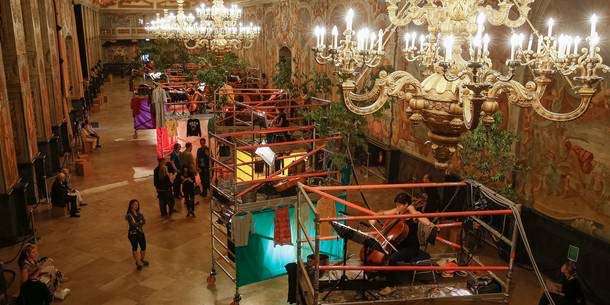
[vc_row][vc_column width=”1/3″ animation=”wpb_bottom-to-top”][vc_column_text]Solistenensemble Kaleidoskop
Director: Georg Nussbaumer
Music: Richard Wagner, Georg Nussbaumer[/vc_column_text][/vc_column][vc_column width=”2/3″ animation=”wpb_bottom-to-top” offset=”vc_hidden-xs”][vc_single_image image=”249″ img_size=”full” add_caption=”yes”][/vc_column][/vc_row][vc_row][vc_column width=”1/3″][/vc_column][vc_column width=”2/3″][/vc_column][/vc_row]
Category: Music
-
Ring
-
Bach / Passion / Johannes
[vc_row][vc_column width=”1/3″ animation=”wpb_bottom-to-top”][vc_column_text]Solistenensemble Kaleidoskop
Choreographer: Laurent Chétouane
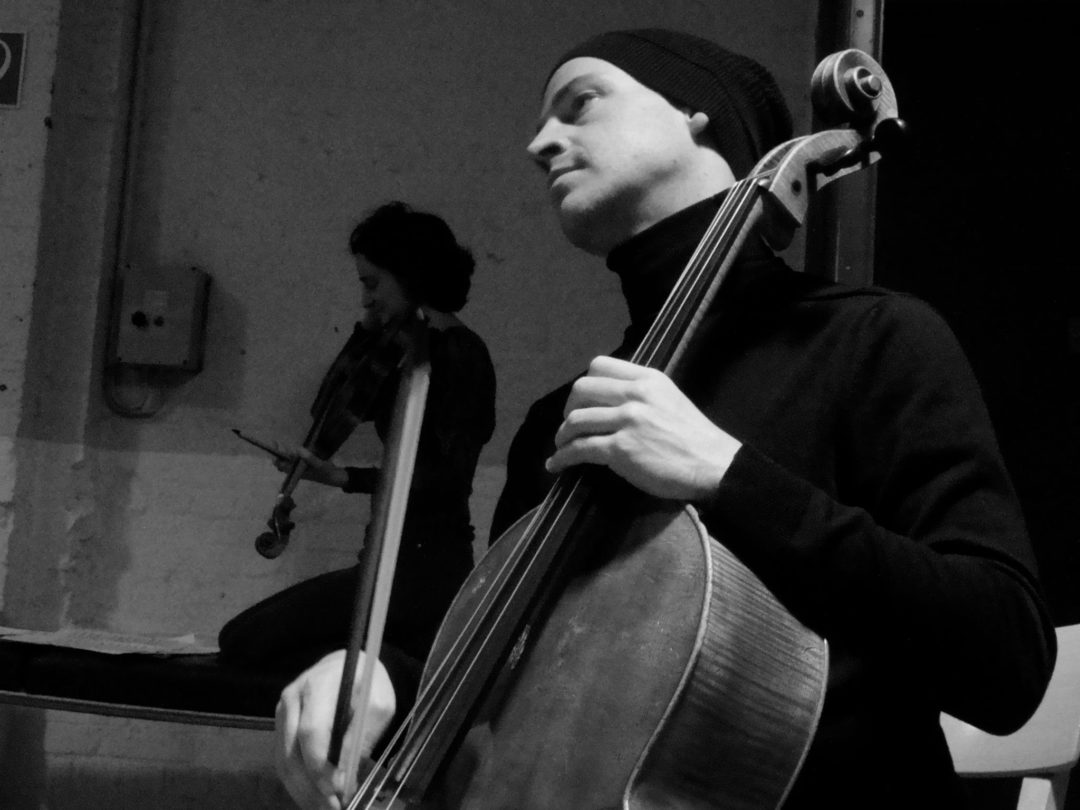
Music: J.S. Bach[/vc_column_text][/vc_column][vc_column width=”2/3″ animation=”wpb_bottom-to-top” offset=”vc_hidden-xs”][vc_single_image image=”242″ img_size=”full” add_caption=”yes”][/vc_column][/vc_row][vc_row][vc_column][vc_column_text]Together with five dancers and seven musicians from Solistenensemble Kaleidoskop, Laurent Chétouane presents a revised version of Johann Sebastian Bach’s composition that was premiered in 1724.After M!M and 15 Variationen über das Offene the production forms the closing part of a trilogy on togetherness.
If one puts J. S. Bach’s St John Passion on stage as a dance work, it is not Pilate’s cross-examination of Jesus that is staged. The focus is on listening to this ‘spectacular machine’ about suffering and death: in the same way as the dancers, spontaneously organised in the space and without the security of a fixed choreography, in a dual sense ‘moved’, touched, changed and shaken, the effect of this music should also be conveyed to the spectators.
In BACH / PASSION / JOHANNES, the choreographer asks what remains of the biblical story that is among the greatest narratives of Christianity. What is our togetherness based on? Into what community can we still merge today as freely and critically thinking people? How can a feeling of belonging be created? Or put quite simply: How can emotions be shared? In any case, the body gripped by the power of this music can and should demonstrate this here.
With: Lisa Densem, Emmanuelle Bernard, Lotte Dibbern, Timoti Fregni, Clara Gervais, Senem Gökce Ogultekin, Nari Hong, Tilman Kanitz, Tammin Julian Lee, Ildiko Ludwig, Nitsan Margaliot, Mikael Marklund, Yumi Onda, Michael Rauter, Beltane Ruiz, Mari Sawada und Sigal Zouk
Choreography: Laurent Chétouane and the dancers
Musical arrangement: Solistenensemble Kaleidoskop
Assistance choreography: Leonie Rodrian
Costumes: Sophie Reble
Light: Stefan Riccius
Sound: Johann Günther
Dramaturgical advice: Leonie Otto
Body coaching: Patricia Brülhart
Assistance costume: Lydia Sonderegger
Assistance touring: Lisa Blöchle
Production Management: Christine Kammer, Hendrik UngerA production by Johannespassion GbR in collaboration with Solistenensemble Kaleidoskop. Co-produced by HAU Hebbel am Ufer, Kampnagel Hamburg, Kaaitheater Brüssel, Rencontres chorégraphiques internationales de Seine-Saint-Denis, Tanzquartier Wien, Maillon – Théâtre de Strasbourg / Scène européene, TAP – Théâtre Auditorium de Poitiers, Metz en Scène, Tanzhaus NRW, House On Fire with support of the Culture Programme of the European Union.
Funded by Basisförderung Berlin / Der Regierende Bürgermeister von Berlin – Senatskanzlei – Kulturelle Angelegenheiten, Fonds Darstellende Künste e.V. / 3-jährige Konzeptionsförderung aus Mitteln des Bundes.
Supported by Rudolf Augstein Stiftung and Dock11/Eden***** Berlin.[/vc_column_text][/vc_column][/vc_row] -
DECAY
[vc_row][vc_column width=”1/3″ animation=”wpb_bottom-to-top”][vc_column_text]Performance: Iza Mortag Freund, Michael Rauter, Tilman Kanitz
Sound: Ole Brolin, Tilman Kanitz
Sculptures: Eva Kotatkova
Artistic Director: Tilman Kanitz[/vc_column_text][/vc_column][vc_column width=”2/3″ animation=”wpb_bottom-to-top” offset=”vc_hidden-xs”][vc_single_image image=”212″ img_size=”full” add_caption=”yes” onclick=”link_image”][vc_column_text][/vc_column_text][/vc_column][/vc_row][vc_row][vc_column][vc_column_text]
Decay
fuck life
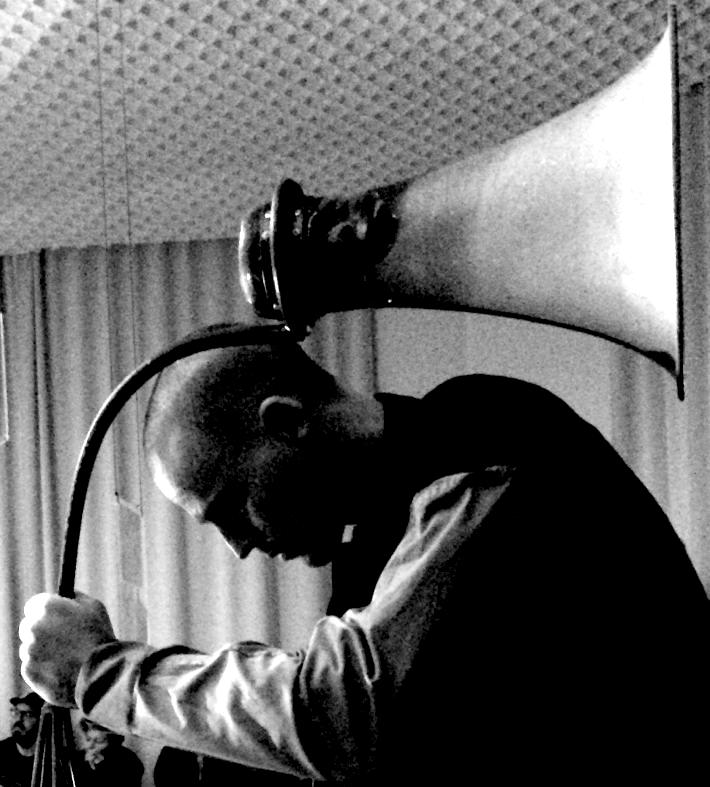
Inspired by Eva Kotátková’s vision of an abandoned spa pavilion and the spa town as a mental borderland, the Schinkel Pavillon Berlin becomes, in Decay, a site of disintegration and deconstruction.
Iza Mortag Freund is situated within a centrally placed sculpture by Eva Kotátková, immersed in a state of recollection—the exhibition space transforms into an interior landscape observed by the performer. At an extreme slowness, the decay of the opening music unfolds; the performer, as a lone witness to the ever-expanding sonic space, interrupts this process at its moment of maximal resonance with Samuel Beckett’s Rockaby.
Kotátková’s sculptures are treated as resonant bodies, played with bows to produce elongated tones and noise textures—lines that measure and shape the acoustic space. Within the sculpture, the performer becomes a projection surface for the audience’s associations and emotions.
Decay dissolves through a deconstruction of the Largo from Bach’s Double Concerto for Two Violins and the final words from Beckett’s Rockaby, fading into white noise.
–
Ausgehend von Eva Kotatkovas Vorstellung eines verlassenen Kurmusikpavillons und dem Kurort als einem mentalen Grenzort, wird der Schinkel Pavillon in Decay zu einem Ort des Verfalls und der Dekonstruktion.
Iza Mortag Freund befindet sich in einer zentral positionierten Skulptur Eva Kotatkovas und erinnert sich – der Ausstellungsraum wird zur Innenwelt, die von der Performerin betrachtet wird. In größter Langsamkeit entfaltet sich der Verfall der Eingangsmusik; die Betrachterin des sich beständig vergrößernden Raumes unterbricht diese Entwicklung im Moment der maximalen klanglichen Expansion mit Samuel Becketts Rockaby.
Die Skulpturen Eva Kotatkovas werden als Klangkörper behandelt und mit Bögen bespielt. Die dabei entstehenden lang gezogenen Töne und Rauschklänge sind Linien, die den Klangraum gleichsam vermessen. Dabei wird die sich in der Skulptur befindende Performerin zur Projektionsfläche der Assoziationen und Emotionen des Publikums.
Decay löst sich mit einer Dekonstruktion von Bachs Largo aus dem Doppelkonzert für zwei Violinen und den letzten Worten aus Beckets Rockaby auf und endet in weißem Rauschen.[/vc_column_text][/vc_column][/vc_row]