[vc_row][vc_column width=”1/3″ animation=”wpb_bottom-to-top”][vc_column_text]Solistenensemble Kaleidoskop
Director: Georg Nussbaumer
Music: Richard Wagner, Georg Nussbaumer[/vc_column_text][/vc_column][vc_column width=”2/3″ animation=”wpb_bottom-to-top” offset=”vc_hidden-xs”][vc_single_image image=”249″ img_size=”full” add_caption=”yes”][/vc_column][/vc_row][vc_row][vc_column width=”1/3″][/vc_column][vc_column width=”2/3″][/vc_column][/vc_row]
Tag: 2014
-
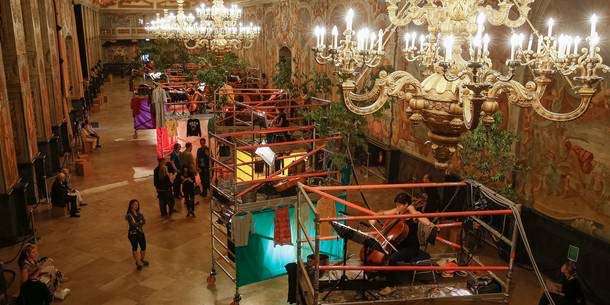
Ring
-
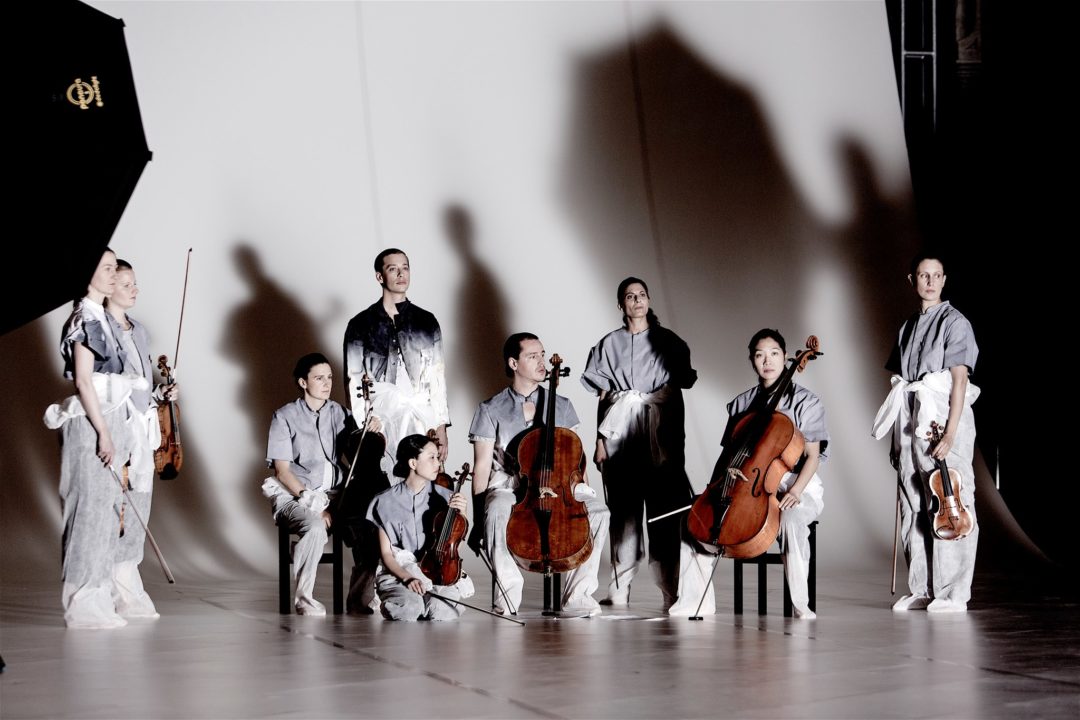
Kaleidoskopville
[vc_row][vc_column width=”1/3″ animation=”wpb_bottom-to-top”][vc_column_text]Solistenensemble Kaleidoskop
Director: Michael Rauter
Costume design: Tilman Kanitz, Boram Lie[/vc_column_text][/vc_column][vc_column width=”2/3″ animation=”wpb_bottom-to-top” offset=”vc_hidden-xs”][vc_single_image image=”245″ img_size=”full” add_caption=”yes”][/vc_column][/vc_row][vc_row][vc_column][vc_column_text]An empty room in which musicians gradually arrive one by one. The individuals are settlers who want to appropriate a landscape: they are searching for possibilities of encountering one another.
Kaleidoskopville is a staged musical evening which examines the practice of making music together and explores the social function of music. How is a community constituted according to traditional musical concepts? Could this represent a utopian social model? Do we have to overcome the standard forms of music-making? Should we develop in more contemporary fashion functioning without hierarchies? What would happen if we simply listened to one another?
Conceived by, directed by, music, costume: Solistenstenemble Kaleidoskop
Stage design, lighting design: Ladislav ZajacA production of Solistenensemble Kaleidoskop in cooperation with Berliner Festspiele, funded by the Capital Cultural Fund and the Governing Mayor of Berlin – Senate Chancellery – Cultural Affairs.
[/vc_column_text][/vc_column][/vc_row]
-
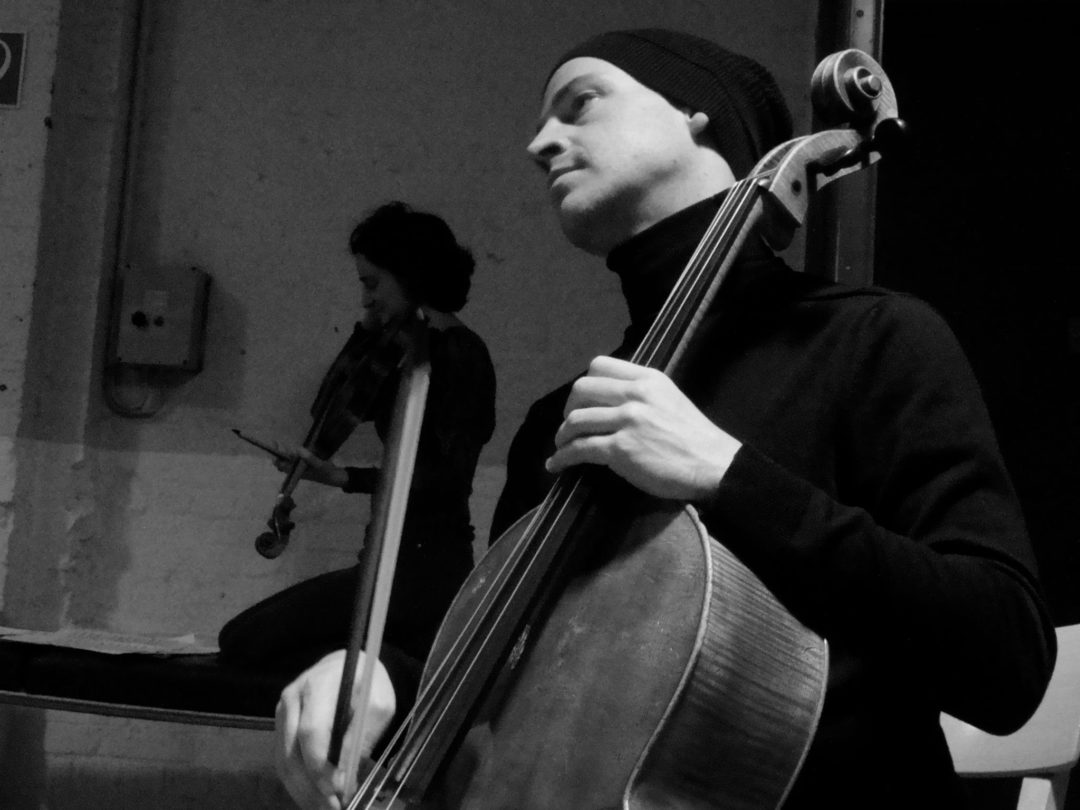
Bach / Passion / Johannes
[vc_row][vc_column width=”1/3″ animation=”wpb_bottom-to-top”][vc_column_text]Solistenensemble Kaleidoskop
Choreographer: Laurent Chétouane
Music: J.S. Bach[/vc_column_text][/vc_column][vc_column width=”2/3″ animation=”wpb_bottom-to-top” offset=”vc_hidden-xs”][vc_single_image image=”242″ img_size=”full” add_caption=”yes”][/vc_column][/vc_row][vc_row][vc_column][vc_column_text]Together with five dancers and seven musicians from Solistenensemble Kaleidoskop, Laurent Chétouane presents a revised version of Johann Sebastian Bach’s composition that was premiered in 1724.After M!M and 15 Variationen über das Offene the production forms the closing part of a trilogy on togetherness.
If one puts J. S. Bach’s St John Passion on stage as a dance work, it is not Pilate’s cross-examination of Jesus that is staged. The focus is on listening to this ‘spectacular machine’ about suffering and death: in the same way as the dancers, spontaneously organised in the space and without the security of a fixed choreography, in a dual sense ‘moved’, touched, changed and shaken, the effect of this music should also be conveyed to the spectators.
In BACH / PASSION / JOHANNES, the choreographer asks what remains of the biblical story that is among the greatest narratives of Christianity. What is our togetherness based on? Into what community can we still merge today as freely and critically thinking people? How can a feeling of belonging be created? Or put quite simply: How can emotions be shared? In any case, the body gripped by the power of this music can and should demonstrate this here.
With: Lisa Densem, Emmanuelle Bernard, Lotte Dibbern, Timoti Fregni, Clara Gervais, Senem Gökce Ogultekin, Nari Hong, Tilman Kanitz, Tammin Julian Lee, Ildiko Ludwig, Nitsan Margaliot, Mikael Marklund, Yumi Onda, Michael Rauter, Beltane Ruiz, Mari Sawada und Sigal Zouk
Choreography: Laurent Chétouane and the dancers
Musical arrangement: Solistenensemble Kaleidoskop
Assistance choreography: Leonie Rodrian
Costumes: Sophie Reble
Light: Stefan Riccius
Sound: Johann Günther
Dramaturgical advice: Leonie Otto
Body coaching: Patricia Brülhart
Assistance costume: Lydia Sonderegger
Assistance touring: Lisa Blöchle
Production Management: Christine Kammer, Hendrik UngerA production by Johannespassion GbR in collaboration with Solistenensemble Kaleidoskop. Co-produced by HAU Hebbel am Ufer, Kampnagel Hamburg, Kaaitheater Brüssel, Rencontres chorégraphiques internationales de Seine-Saint-Denis, Tanzquartier Wien, Maillon – Théâtre de Strasbourg / Scène européene, TAP – Théâtre Auditorium de Poitiers, Metz en Scène, Tanzhaus NRW, House On Fire with support of the Culture Programme of the European Union.
Funded by Basisförderung Berlin / Der Regierende Bürgermeister von Berlin – Senatskanzlei – Kulturelle Angelegenheiten, Fonds Darstellende Künste e.V. / 3-jährige Konzeptionsförderung aus Mitteln des Bundes.
Supported by Rudolf Augstein Stiftung and Dock11/Eden***** Berlin.[/vc_column_text][/vc_column][/vc_row] -

Omöoohno…
[vc_row][vc_column width=”1/3″ animation=”wpb_bottom-to-top”][vc_column_text]
Music: Thomas Mahmoud, Tilman Kanitz, Michael Rauter, Jan St. Werner
[/vc_column_text][/vc_column][vc_column width=”2/3″ animation=”wpb_bottom-to-top” offset=”vc_hidden-xs”][vc_single_image image=”238″ img_size=”full” add_caption=”yes”][/vc_column][/vc_row][vc_row][vc_column][vc_column_text]
omöohhhnopahtuuontudonthose
omöohhhnopahtuuontudonthose is a performative arc of tension composed of multiple self-contained compositional units. Just as the title itself oscillates—shifting in meaning depending on dialect and artistic viewpoint—the content fluctuates between dissolution and coherence.
Starting from a short poem by Jan St. Werner, the quartet weaves together various compositions, both original and borrowed, into a multimedia performance. Video, electronics, fashion, and excerpts from Oswald Wiener’s Die Verbesserung von Mitteleuropa, interpreted by Thomas Mahmoud, intertwine with compositions by Michael Rauter, Jan St. Werner, Tilman Kanitz, Thomas Mahmoud, and Stefan Streich. Together, they form a sedately confrontational excursion into the complex language of modern post-interdisciplinarity.
“Here, alone, beneath the vast dome of the pure sky, I dreamed of a burning sun in which nothing stood apart, in which nothing endured, yet nothing ended— as if destruction, before its work was done, destroyed itself.”
Artists:
Jan St. Werner — electronics, video
Michael Rauter — cello, video
Tilman Kanitz — cello, fashion
Thomas Mahmoud — voice, electronics–
Mulitimediaperformance mit Stimme, Celli, Elektronik, Video, Stoff, Text und Farbe
omöohhhnopahtuuontudonthose ist einen performativen Spannungsbogen, der aus mehreren, für sich stehenden kompositorischen Einheiten besteht. So wie der Titel der Aufführung oszilliert auch ihr Inhalt je nach Dialekt und künstlerischer Perspektive zwischen Auflösung und Stringenz. Ausgehend von einem kurzen Gedicht Jan St. Werners wird das Quartett verschiedene Kompositionen eigener und fremder Herkunft in einer mulitimedialen Aufführung verbinden. Videos, Elektronik, Mode und Texte aus Oswald Wieners Die Verbesserung von Mitteleuropa, interpretiert von Thomas Mahmoud sowie Kompositionen von Michael Rauter, Jan St. Werner, Tilman Kanitz, Thomas Mahmoud und Stefan Streich verbinden sich zu einer sediert offensiven Exkursion in die komplexe Sprache der modernen Postinterdisziplinarität.
„Hier, allein, unter der ungeheuren Wölbung des reinen Himmels, träumte ich von einer glühenden Sonne, darin nichts Gesondertes bestand, darin nichts dauerte, aber auch nichts endete, als ob die Zerstörung, bevor ihr Werk getan, sich selbst zerstörte.“
Jan St. Werner – Elektronik, Video I Michael Rauter – Cello, Video I Tilmann Kanitz – Cello, Mode I Thomas Mahmoud – Stimme, Elektronik
[/vc_column_text][/vc_column][/vc_row]
-
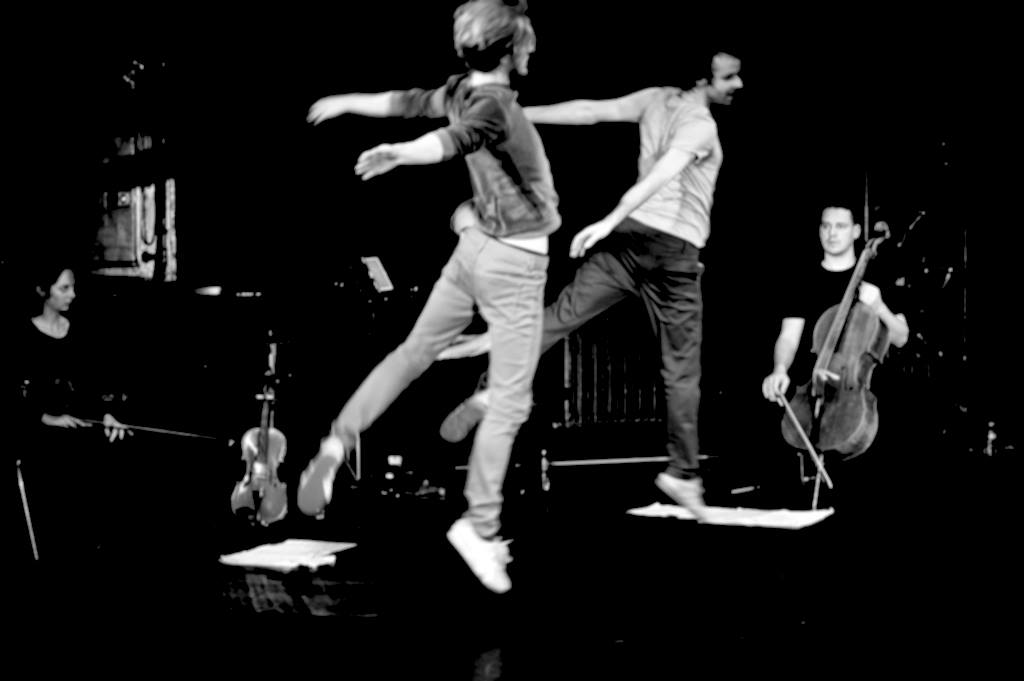
15 Variationen
[vc_row][vc_column width=”1/3″ animation=”wpb_bottom-to-top”][vc_column_text]
Music: Domenico Gabrielli, Nico Mullhy
Choreography: Laurent Chétouane[/vc_column_text][/vc_column][vc_column width=”2/3″ animation=”wpb_bottom-to-top” offset=”vc_hidden-xs”][vc_single_image image=”235″ img_size=”full” add_caption=”yes”][/vc_column][/vc_row][vc_row][vc_column][vc_column_text]
15 Variationen über das Offene
Laurent Chétouane brings philosophy and choreography together on a level playing field. He creates an adventurous, puristic aesthetic, in which language, space and movement are set against each other. The second part of his trilogy on togetherness applies the concept of »openness«, which according to Jean-Luc Nancy resists any kind of definition. Chétouane transfers this idea to community and dance. Performing to live music from Nico Muhly and Domenico Gabrielli, four dancers develop constellations and encounters. Following the pluralistic approach to openness, they seek out possibilities for a diverse community.
Dance: Matthieu Burner, Mikael Marklund, Senem Gökçe Oğultekin, Sigal Zouk
Music: Emmanuelle Bernard (Violine und Bratsche), Mathias Halvorsen (Klavier), Tilman Kanitz/Michael Rauter (Cello), Nico Muhly, Domenico Gabrielli
Choreografie: Laurent Chétouane
Kostüme: Sophie Reble
Dramaturgie: Leonie Otto
Lights: Stefan Riccius
Choreografie: Leonie Rodrian
Patricia Brülhart, Kerstin Wagner, Christine Kammer (Büro Tom Stromberg), Hendrik Unger
Eine Koproduktion von Tanzquartier Wien, Les Substistances (Lyon), PACT Zollverein Essen, HAU Hebbel am Ufer Berlin, gefördert von: Basisförderung Berlin/ Der Regierende Bürgermeister von Berlin – Senatskanzlei – Kulturelle Angelegenheiten und vom Fonds Darstellende Künste e.V./3-jährige Konzeptionsförderung aus Mitteln des Bundes
Mit freundlicher Unterstützung von Dock11/Eden*****Berlin[/vc_column_text][/vc_column][/vc_row]
-

Nach Wien
[vc_row][vc_column width=”1/3″ animation=”wpb_bottom-to-top”][vc_column_text]Solistenensemble Kaleidoskop
Music: Haubenstock-Ramati, Georg Nussbaumer, Ludwig van Beethoven, Arnold Schoenberg, Christoph Herndler
Artistic Director: Tilman Kanitz[/vc_column_text][/vc_column][vc_column width=”2/3″ animation=”wpb_bottom-to-top” offset=”vc_hidden-xs”][vc_single_image image=”232″ img_size=”full” add_caption=”yes”][/vc_column][/vc_row][vc_row][vc_column width=”1/3″][/vc_column][vc_column width=”2/3″][vc_column_text]Nach Wien
With Nach Wien (“To Vienna”), Kaleidoskop presents composers whose work has been fundamentally shaped by the city of Vienna—and, at the same time, traces how the musical capital has produced wave after wave of avant-garde music, each building recognizably upon its predecessors.
Beethoven, represented here by just two short trio movements, anchors the program in the past. At the turn of the 20th century, Arnold Schoenberg composed his early works, still steeped in Romanticism—among them the string sextet Verklärte Nacht. Yet within his circle emerged the musical avant-garde that would become the Second Viennese School.
Roman Haubenstock-Ramati, less known today than many of his students, serves as a bridge from the Second Viennese School to the New Music of the 1950s to 1970s. Initially deeply influenced by Anton Webern, he began developing graphic notation techniques in the 1950s that would shape a generation.
Peter Ablinger, Beat Furrer, Christoph Herndler, and Georg Nussbaumer (the only one of the four who did not study directly with Haubenstock-Ramati) have each been influenced by him in distinct ways.
Solistenensemble Kaleidoskop
Violin: Elfa Rún Kristinsdóttir, Santiago Medina
Viola: Justin Caulley, Johannes Pennetzdorfer
Cello: Tilman Kanitz, Andreas Voss
Artistic Direction: Tilman Kanitz–
Mit Nach Wien präsentiert Kaleidoskop Komponisten, deren Schaffen maßgeblich von der Stadt Wien geprägt wurde – und zugleich, wie die Musikstadt Wien über Jahrhunderte hinweg eine musikalische Avantgarde hervorgebracht hat, die dennoch immer erkennbar aufeinander aufbaut.
Beethoven, von dem nur zwei kurze Streichtriosätze erklingen, ist der Anker in der Vergangenheit. Schönberg schrieb Ende des 19. Jahrhunderts seine ersten Werke, die noch die Romantik beschwören, darunter das Streichsextett Verklärte Nacht. Zugleich entstand in seinem Umfeld aber auch die musikalische Avantgarde des beginnenden 20. Jahrhunderts, die zweite Wiener Schule.
Roman Haubenstock-Ramati ist als Komponist heute weniger bekannt als viele seiner Schüler. Sein Schaffen führt von der zweiten Wiener Schule zur der Neuen Musik der 1950er bis 1970er Jahre. Nachdem er zunächst stark von Anton Webern beeinflusst war, begann er in den fünfziger Jahren grafische Notationstechniken zu entwickeln.
Peter Ablinger, Beat Furrer, Christoph Herndler und Georg Nussbaumer (der als einziger dieser vier nicht bei Haubenstock-Ramati studiert hat) sind alle auf unterschiedlichste Weise von ihm beeinflusst worden.
Solistenensemble Kaleidoskop
Violine: Elfa Rún Kristinsdóttir, Santiago Medina
Viola: Justin Caulley, Johannes Pennetzdorfer
Violoncello: Tilman Kanitz, Andreas VossKünstlerische Leitung: Tilman Kanitz[/vc_column_text][/vc_column][/vc_row]
-
PALIMPSEST
[vc_row][vc_column width=”1/3″ animation=”wpb_bottom-to-top”][vc_column_text]Solistenensemble Kaleidoskop
Voice: Iza Mortag Freund
Sound: Ole Brolin, Tilman Kanitz
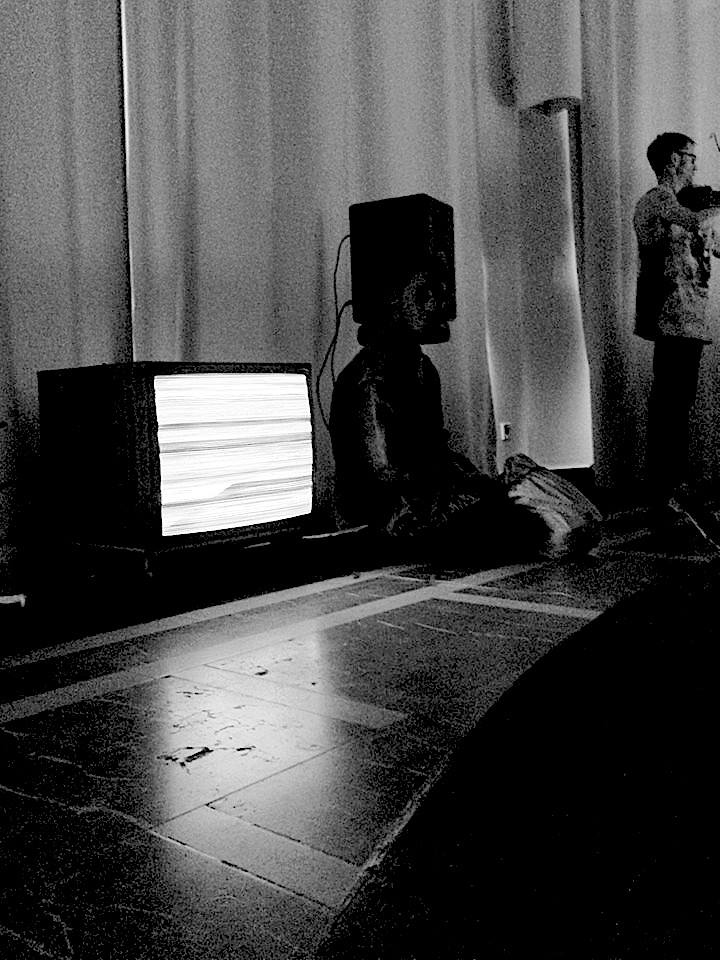
Artistic Director: Tilman Kanitz[/vc_column_text][/vc_column][vc_column width=”2/3″ animation=”wpb_bottom-to-top” offset=”vc_hidden-xs”][vc_single_image image=”226″ img_size=”full” add_caption=”yes” onclick=”link_image”][/vc_column][/vc_row][vc_row][vc_column][vc_column_text]Unlimited Capacity for Recording and the Preservation of Lasting Traces
A performance with Iza Mortag Freund, BASMNR, and Solistenensemble Kaleidoskop at Schinkel Pavillon
Following Mud and Decay, Tilman Kanitz continues his exploration of overwriting, transparency, and the simultaneity of past and present thoughts and emotions in Palimpsest. While Decay investigated the boundaries of the unspeakable, Palimpsest addresses the utopian notion of the self and its inevitable disintegration.
Visually, this process is evoked through a staged intervention within Eva Kotátková’s exhibition Anatomical Orchestra. This quasi-static moment is sustained by the music of Dufay alongside works by Mathias Spahlinger, Mark Andre, Peter Ablinger, and Christoph Herndler.
The acoustic skeleton of Palimpsest is an electronic composition by BASMNR (Ole Brolin and Tilman Kanitz). It drifts through the infinity of white noise, dissolves into the microtonally organized textures and noise of the contemporary works, and resurfaces within the music of Dufay.
Violin: Anna Faber
Viola: Justin M. Caulley
Cello: Tilman Kanitz
Theorbo: Magnus Andersson
Sculptures: Eva Kotátková
Performance: Iza Mortag Freund
Electronics: Ole Brolin
Concept & Art Direction: Tilman Kanitz–
Unbegrenzte Aufnahmefähigkeit und Erhaltung von Dauerspuren
Eine Performance mit Iza Mortag Freund, BASMNR und Solistenensemble Kaleidoskop im Schinkel Pavillon
Nach Mud und Decay setzt sich Tilman Kanitz in Palimpsest mit dem Überschreiben, dem Durchscheinen und der Gleichzeitigkeit vergangener und gegenwärtiger Gedanken und Emotionen auseinander. Ging es in Decay um das Ausloten des Unsagbaren, behandelt Palimpsest die utopische Vorstellung des eigenen Selbst und deren Zerfall.
Visuell wird dieser Prozess in einer szenischen Andeutung auf der Bühne Eva Kotatkovas‘ Ausstellung Anatomical Orchestra gezeigt. Getragen wird dieser quasi statische Moment durch Musik Dufays und Werke der Komponisten Mathias Spahlinger, Marc Andre, Peter Ablinger und Christoph Herndler.
Das akustische Skelett von Palimpsest ist eine elektronische Komposition von BASMNR (Ole Brolin/Tilman Kanitz). Sie bewegt sich durch die Unendlichkeit des White Noise, verschwindet hinter den mikrotonal organisierten Rausch- und Geräuschklängen der zeitgenössischen Werke, und taucht mit der Musik Dufays wieder auf.
Violine: Anna Faber
Viola: Justin M. Caulley
Violoncello: Tilman Kanitz
Theorbe: Magnus Andersson
Skulpturen: Eva Kotatkova
Performance: Iza Mortag Freud
Elektronik: Ole Brolin
Concept, Artistic Direction: Tilman Kanitz[/vc_column_text][/vc_column][/vc_row]
-
DECAY
[vc_row][vc_column width=”1/3″ animation=”wpb_bottom-to-top”][vc_column_text]Performance: Iza Mortag Freund, Michael Rauter, Tilman Kanitz
Sound: Ole Brolin, Tilman Kanitz
Sculptures: Eva Kotatkova
Artistic Director: Tilman Kanitz[/vc_column_text][/vc_column][vc_column width=”2/3″ animation=”wpb_bottom-to-top” offset=”vc_hidden-xs”][vc_single_image image=”212″ img_size=”full” add_caption=”yes” onclick=”link_image”][vc_column_text][/vc_column_text][/vc_column][/vc_row][vc_row][vc_column][vc_column_text]
Decay
fuck life
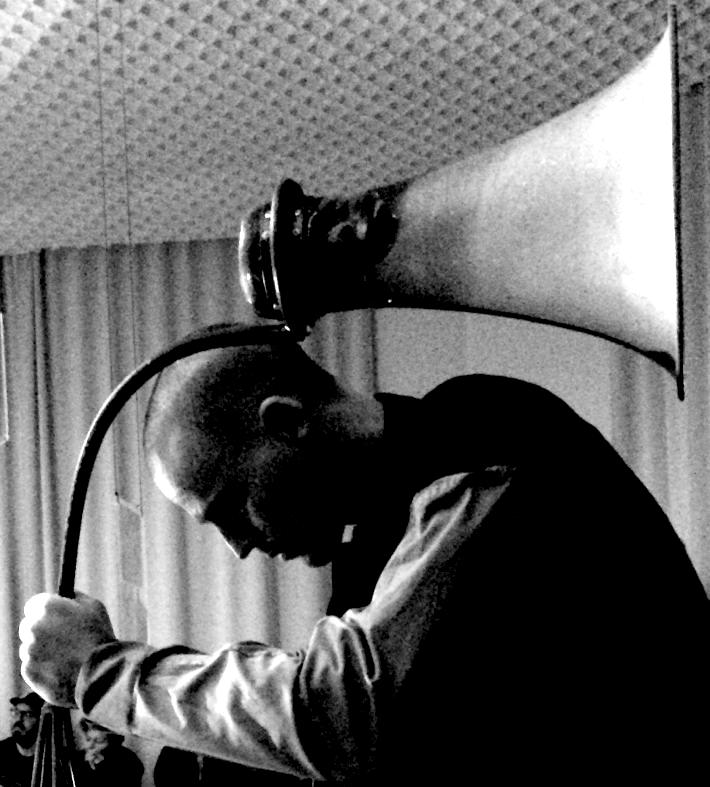
Inspired by Eva Kotátková’s vision of an abandoned spa pavilion and the spa town as a mental borderland, the Schinkel Pavillon Berlin becomes, in Decay, a site of disintegration and deconstruction.
Iza Mortag Freund is situated within a centrally placed sculpture by Eva Kotátková, immersed in a state of recollection—the exhibition space transforms into an interior landscape observed by the performer. At an extreme slowness, the decay of the opening music unfolds; the performer, as a lone witness to the ever-expanding sonic space, interrupts this process at its moment of maximal resonance with Samuel Beckett’s Rockaby.
Kotátková’s sculptures are treated as resonant bodies, played with bows to produce elongated tones and noise textures—lines that measure and shape the acoustic space. Within the sculpture, the performer becomes a projection surface for the audience’s associations and emotions.
Decay dissolves through a deconstruction of the Largo from Bach’s Double Concerto for Two Violins and the final words from Beckett’s Rockaby, fading into white noise.
–
Ausgehend von Eva Kotatkovas Vorstellung eines verlassenen Kurmusikpavillons und dem Kurort als einem mentalen Grenzort, wird der Schinkel Pavillon in Decay zu einem Ort des Verfalls und der Dekonstruktion.
Iza Mortag Freund befindet sich in einer zentral positionierten Skulptur Eva Kotatkovas und erinnert sich – der Ausstellungsraum wird zur Innenwelt, die von der Performerin betrachtet wird. In größter Langsamkeit entfaltet sich der Verfall der Eingangsmusik; die Betrachterin des sich beständig vergrößernden Raumes unterbricht diese Entwicklung im Moment der maximalen klanglichen Expansion mit Samuel Becketts Rockaby.
Die Skulpturen Eva Kotatkovas werden als Klangkörper behandelt und mit Bögen bespielt. Die dabei entstehenden lang gezogenen Töne und Rauschklänge sind Linien, die den Klangraum gleichsam vermessen. Dabei wird die sich in der Skulptur befindende Performerin zur Projektionsfläche der Assoziationen und Emotionen des Publikums.
Decay löst sich mit einer Dekonstruktion von Bachs Largo aus dem Doppelkonzert für zwei Violinen und den letzten Worten aus Beckets Rockaby auf und endet in weißem Rauschen.[/vc_column_text][/vc_column][/vc_row]
-
MUD
[vc_row][vc_column width=”1/3″ animation=”wpb_bottom-to-top”][vc_column_text]
Voice: Iza Mortag Freund
Elektronik: Ole Brolin
Cello: Michael Rauter, Tilman Kanitz
Artistic Director: Tilman Kanitz[/vc_column_text][/vc_column][vc_column width=”2/3″ animation=”wpb_bottom-to-top” offset=”vc_hidden-xs”][vc_single_image image=”202″ img_size=”full” add_caption=”yes”][/vc_column][/vc_row]