The Curator as Artist
While the role of the art curator had already been steadily gaining power and influence in the second half of the twentieth century, its significance exploded in the 2000s and 2010s. This development is generally lamented—most seem to view the rapid expansion of curatorial authority with suspicion, with only the curators themselves appearing to rejoice in their growing competencies. My interest here, however, lies neither in the economic nor the cultural-political consequences of this shift, but rather in the point where the once-sharp distinction between artist and curator begins to blur. There is much to suggest that the opening-up of the artwork—a project pursued with near-desperate intensity throughout the twentieth century—is no longer being driven from within, by the artist, but far more successfully from without, by the curator.
Rather than presenting a systematic argument, I will describe two examples of what I consider successful curatorial work—one from the visual arts and one from classical (or new) music—and conclude by highlighting some shared aspects of these conceptually and structurally distinct curatorial approaches.
Unmöglichkeit II: Unbox
In April 2016, as part of the Unmöglichkeiten (Impossibilities) I-IV series by the Berlin-based soloist ensemble Kaleidoskop, the second concert, Unbox, took place at the Galerie Picknick Studio Berlin. Tilman Kanitz, the ensemble’s artistic director and curator of the concert series, explained the cryptic title by stating that all of the ensemble’s projects were “impossible” in two ways: first, because they were “utopian endeavors” whose realization was “fundamentally impossible,” and second, because, from a conservative standpoint, it was “impossible” in a moral sense to perform classical music the way the ensemble repeatedly did (all quotes from Tilman Kanitz in conversation with the author, November 5, 2018, Berlin).
The “core idea for the evening,” Kanitz said, was twofold: first, the question of how a musician “relates to the music they play” or “how a musician hears themselves,” and second, the question of “whether the audience actually hears the same thing the musician hears.” His hypothesis was that “what the audience hears is something entirely different from what the musician hears.” He then wondered, “What happens when the musician is alone with themselves, their music, and their instrument, working on the music?” and whether it wouldn’t be “fascinating” to make this “accessible to an audience, because perhaps that’s where the more interesting things happen—in terms of unsecured music-making.” His focus, then, was on “opening up the process: What does a musician hear while making music, and what does that mean emotionally, intellectually?” and, consequently, on the question of whether “this process of working on music is something that can be made visible.” From this line of inquiry emerged the title Unbox, a reference to the YouTube genre of videos documenting the unpacking of industrial products.
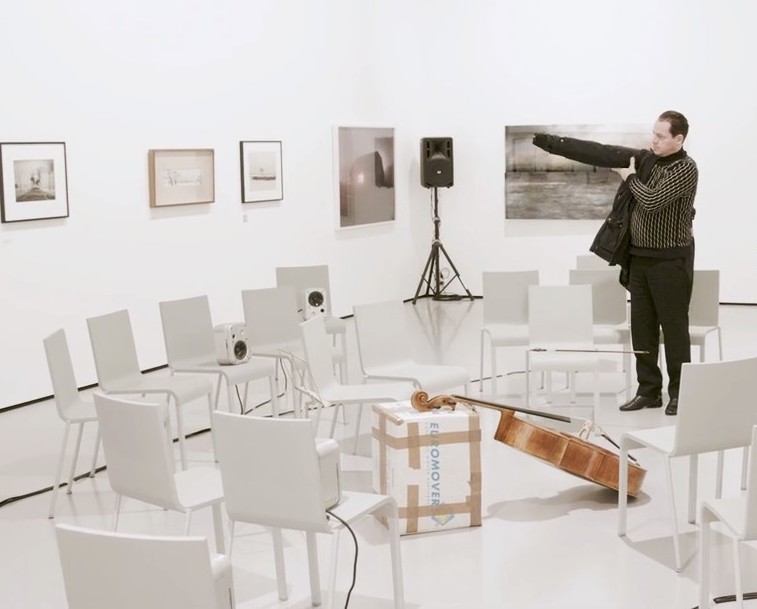
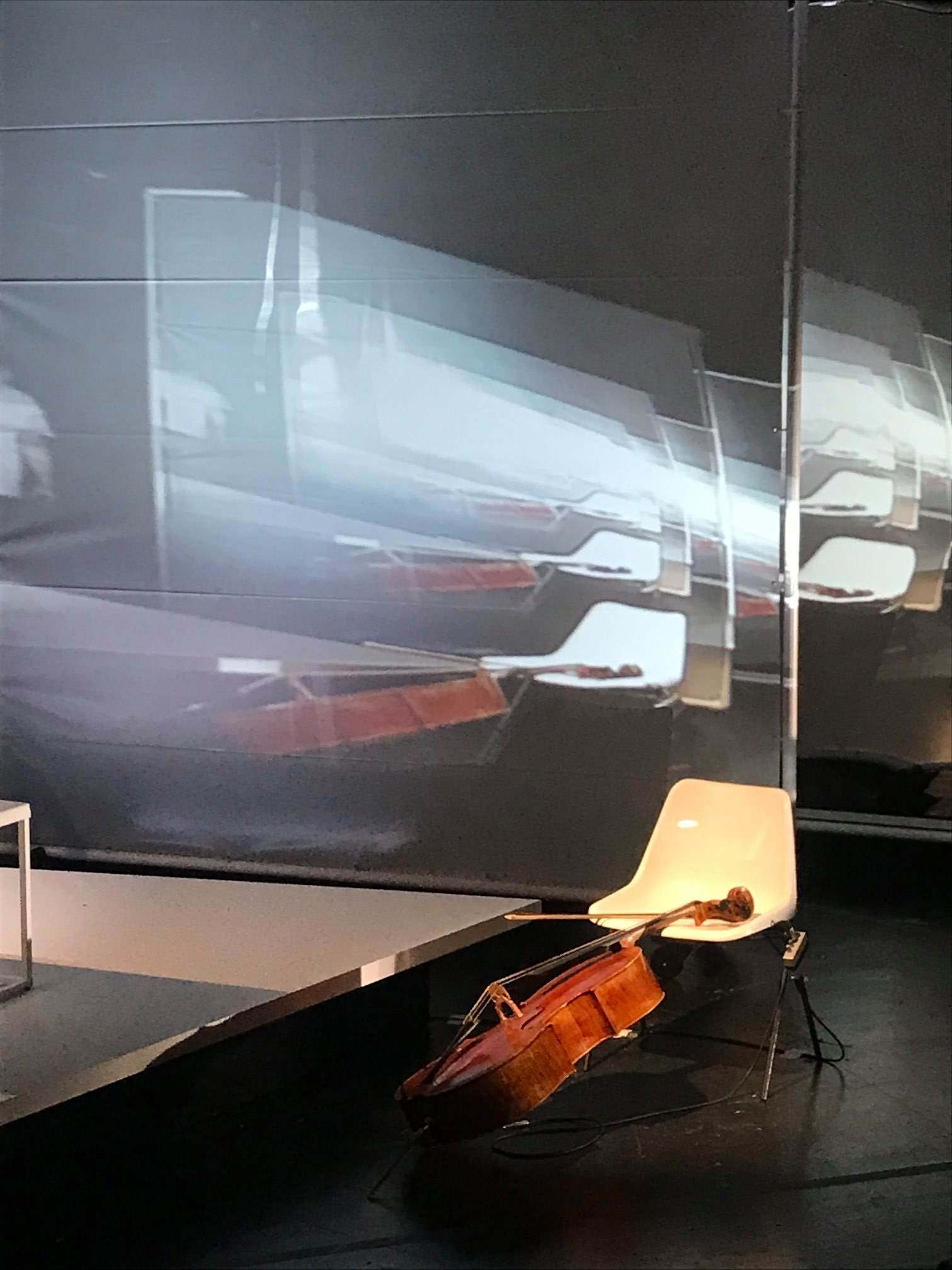
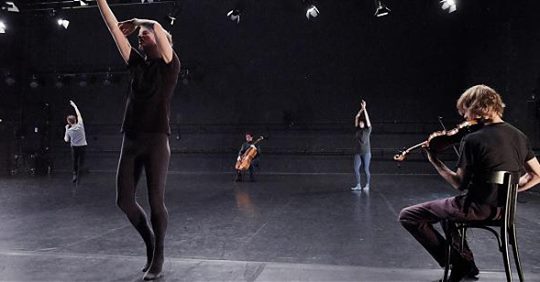
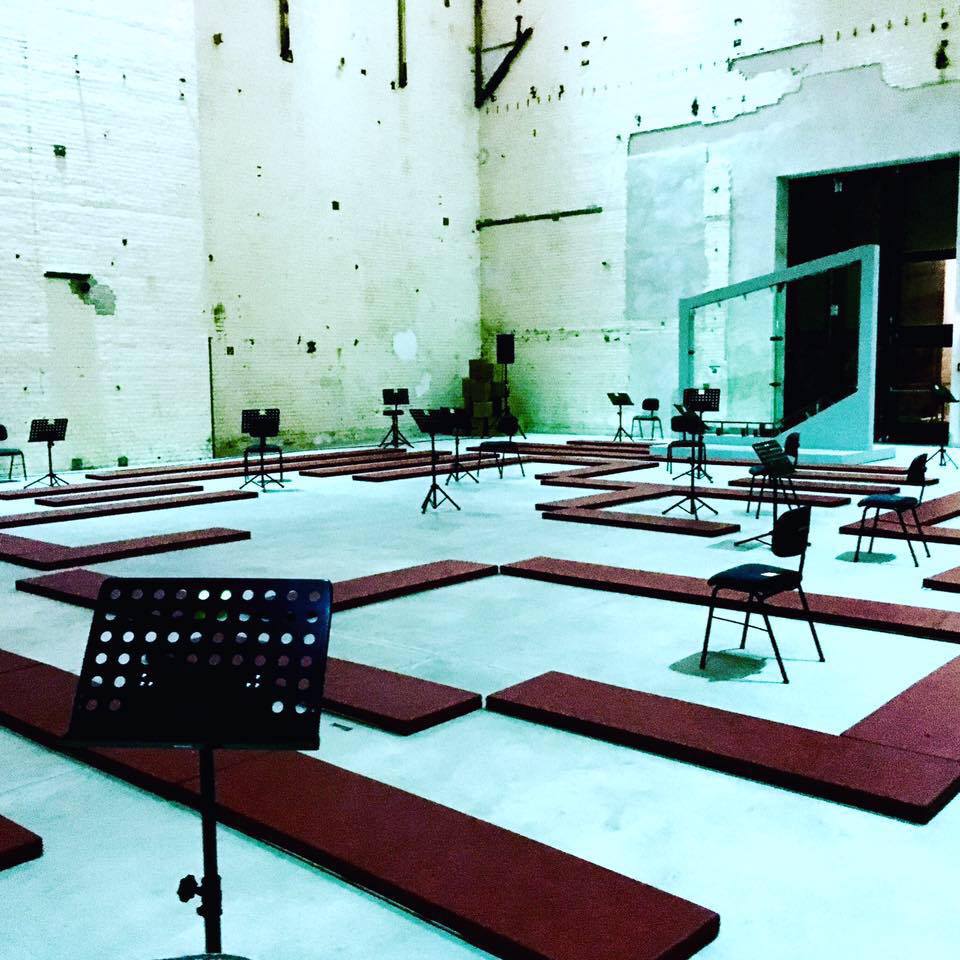
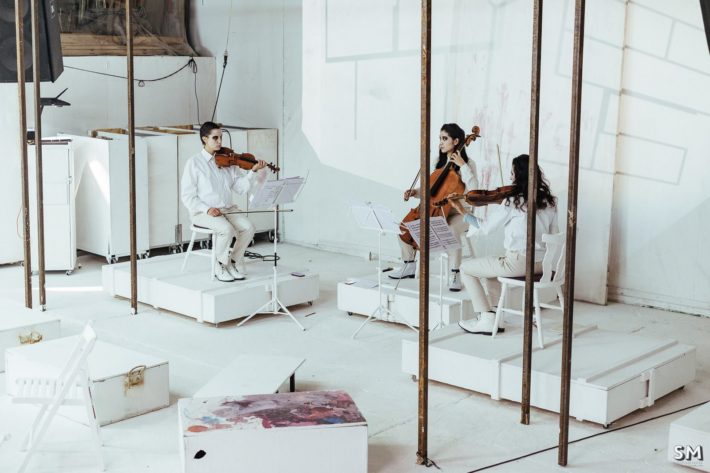
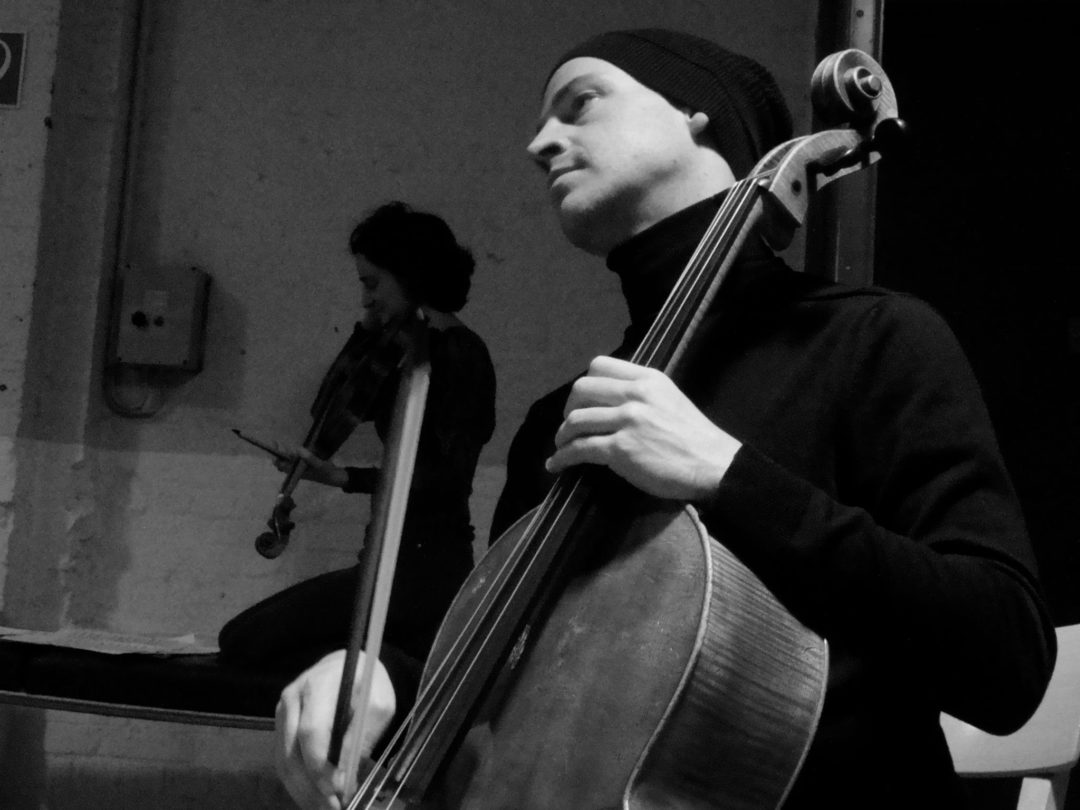
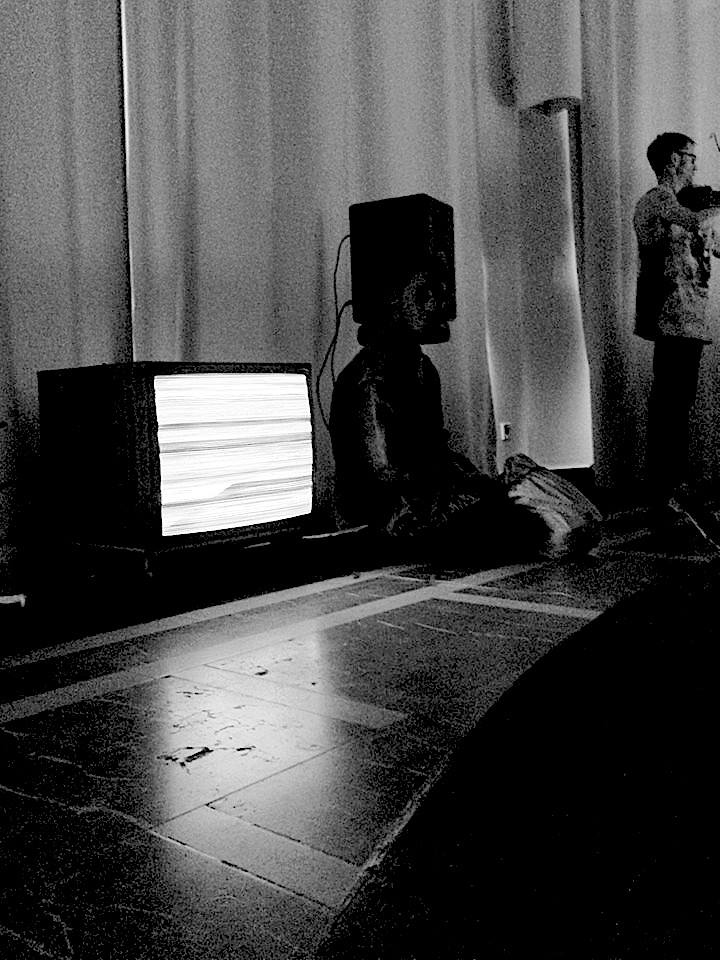
The Picknick Studio, at its former location in Berlin-Mitte, was a ground-level, elongated space with tall, non-soundproofed windows facing the busy Mohrenstraße and an apse-like extension at the far end, accessible via nine steps. The four instrumentalists—a string quartet, despite only trios and solo pieces being programmed—sat on tall black podiums with their backs to the audience and faces toward the long windowed side of the room. Artist Dirk Bell had created small black-and-white seating cubes for the audience, which were movable but placed behind the instrumentalists. At the apex of the apse, Bell had installed a large polished steel plate, from which a narrow beam had been cut and mounted on the opposite wall as a kind of sightline. Directly in front of each of the four instrumentalists, a smaller polished steel plate leaned against the window wall—the audience’s only way of seeing the performers’ fronts, albeit as distorted reflections. On the windowless long side, behind the audience, four classic Revox tape machines were positioned exactly opposite the four performers, serving as an acoustic mirror.
At the start, the instrumentalists were already seated on their podiums. Once the audience had taken their places on the cubes between the performers and the tape machines, the musicians waited a moment, then stood up simultaneously, walked around the audience to their assigned tape machines, started them with the machines’ characteristic loud click, and then returned to their podiums in the same manner. From the tapes played a recording of the Adagio from Ludwig van Beethoven’s String Trio in G Major, Op. 9, No. 1, performed by members of Kaleidoskop. Since the individual parts were not synchronized, they increasingly diverged over the course of the movement.
During rehearsals, Kanitz had asked the musicians to each prepare their part of the first movement independently and record it without coordinating with the others. He had thought it “more interesting to highlight the differences in individual musical hearing when based on a chamber piece rather than a solo work,” with the parts later “layered on top of each other.” In planning this segment, he had been inspired by Samuel Beckett’s Krapp’s Last Tape, as “for musicians, it’s often the case early on that music has a retrospective quality—the pieces we play are often ones we first encountered an eternity ago.” The idea was to place the audience as “witnesses to this moment” where the musicians “turn inward”—acoustically through their recordings, visually through the polished steel plates—listening to something whose “first encounter happened long ago.”
Once the tapes had run out—the cello part had been played much slower than the other two and thus lasted longer—Paul Valikoski stood up with his violin, walked to the tape machines, and turned them off one by one. He then positioned himself in front of the flat wall near the entrance and performed Salvatore Sciarrino’s quiet and slow Capriccio No. 2.
While the tape recordings had been played at relatively high volume, largely drowning out any ambient noise, the brief silence afterward and the dal niente entrance of Sciarrino’s Capriccio made the street noise—unfiltered due to the uninsulated windows—painfully audible. For Kanitz, turning off the tape machines and the ensuing silence made it “clear that we are now in this room, in this reality,” while the start of the Sciarrino and the intrusion of street noise signaled that “the space transforms again, and the true reality is outside.”
The entire evening was structured around the alternation between tutti and solo. After the Beethoven tutti from tape and the Sciarrino solo came a collage of the opening bars of the final Presto from Beethoven’s trio, the opening of Wolfgang Rihm’s Music for Three String Instruments, and a fragment of the viola cadenza from Helmut Lachenmann’s Gran Torso. Kanitz explained that the central piece, the Beethoven trio, had to be an early, less familiar work so that its “basic gesture was present” without its later “elaboration,” allowing part of the audience to hear it “for the first time,” even if they were “naturally familiar with its grammar, its language.” As complements, he sought two 20th-century chamber works “that relate to Beethoven.” Rihm’s piece essentially “sounds like a Beethoven parody” and carries a “strong backward-looking quality,” while Lachenmann’s Gran Torso clearly situates itself in the progressive “tradition-line” of Beethoven’s quartets—yet the “tonal rhythm” and “overemphasis of traditional musical gesture” that Lachenmann sought to realize in rehearsals remain “incredibly present” in his music.
For the roughly 15-minute solo for viola d’amore by Georg Friedrich Haas, Ildiko Ludwig sat on the lower part of the steps leading to the apse.
Regarding the selection of pieces, Kanitz notably stated that his goal was not to program “a bunch of favorite pieces” but rather to explore “how a musician can become a performer.” That is, how to “minimize or align the difference between the work, the performed work, and the person—not the performer, but the actual person.” The Unbox concept was not about musicians “assuming a performative role, but rather about them being exhibited,” hence their presentation as “sculptures” or “displayed bodies” in the opening setup. In the case of Haas’s piece, a key aspect was that the viola d’amore was “a strange foreign object” for the trained violist—both familiar and unfamiliar—resulting in an “awkwardness and discomfort” that made a professionally detached performance difficult. Haas’s piece, Kanitz said, is an “endless monologue,” leaving one to wonder whether someone unfamiliar with “this kind of music” would feel it was “about deep content” or “perhaps about nothing.” It was precisely this peculiar restraint in the long composition that allowed the musician’s personality to emerge in the “seemingly endless delivery.”
This second solo was interrupted by the third tutti, again with the final Presto from Beethoven’s trio, where the three musicians—in reference to the tape machine prologue—performed their parts in “maximum autism,” producing a “deliberate multiplicity of tumultuous chaos” in contrast to the “unified coherence” of Haas’s solo. While the colleagues realized this “acoustically chaotic state,” the violist ran back to her podium to cut off the tutti with the complete viola solo from *Gran Torso*: the “tumult of multiplicity implodes” into this “solo at zero, at sonic nothingness, practically inaudible.” However, this Lachenmann quote was merely a transition to Mark Andre’s E for cello, the only one of the four solos performed in place, on the podium.
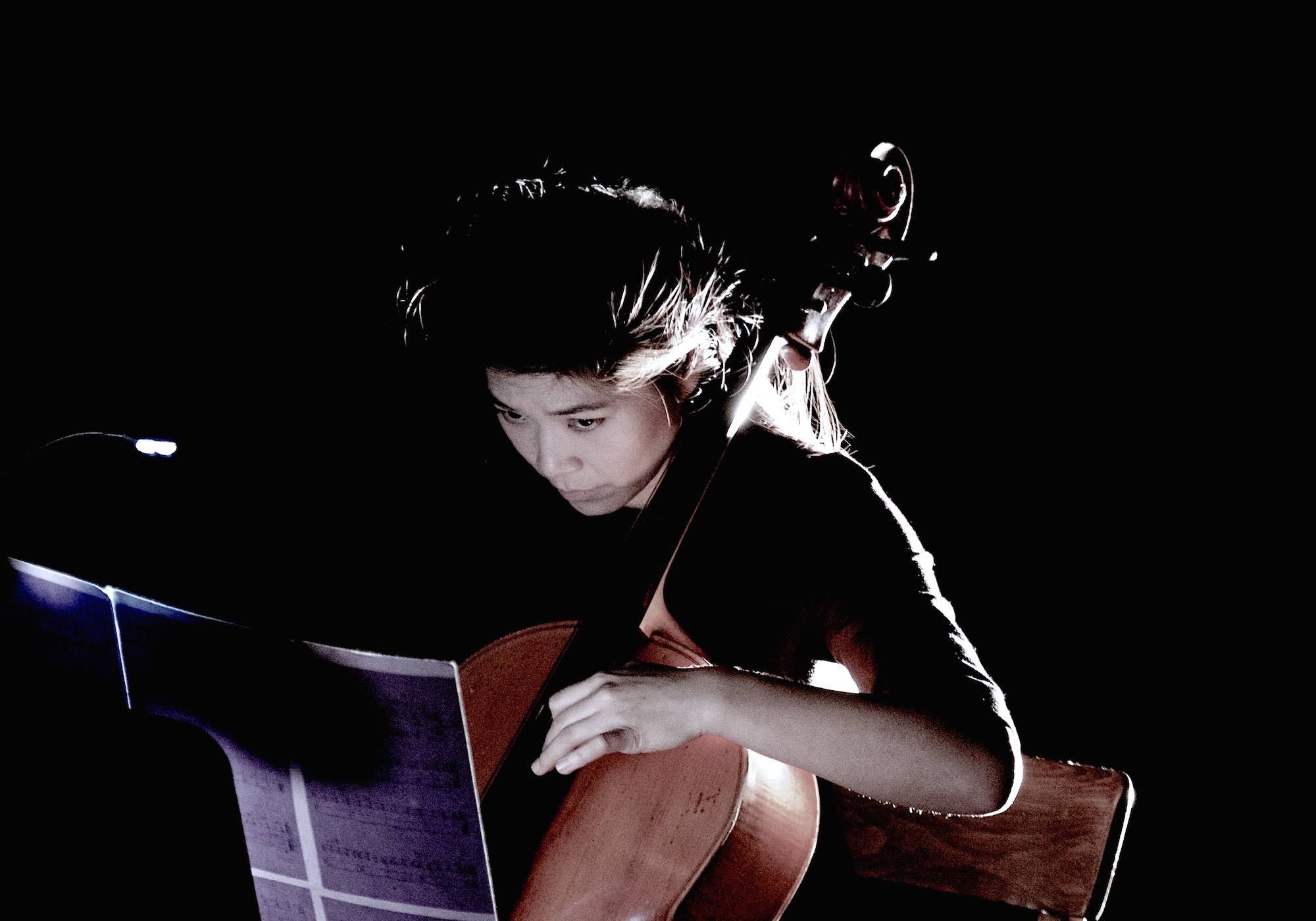
Here, the shift in position involved cellist Boram Lie turning away from her reflection in the polished steel plate to face the audience. The role of transitions between consecutive pieces and segments was crucial. When Kanitz speaks of the Beethoven tutti “interrupting” the Haas solo, “imploding” into the Gran Torso solo, and E “threading itself into” the “rapturous sound” of the viola solo, this does not mean the pieces actually interrupted or overlapped for extended periods. Rather, either the end of one piece was slightly truncated or the start of the next slightly accelerated to “harden the transitions,” as Kanitz put it, leaving it to the listeners to decide when to “jump from one piece to the next.” Cinematically speaking, these would not be “dissolves” but cuts where the viewer has “all the information” to follow the shot to its end, with full exposition amounting to “banalization.”
In selecting E, Kanitz sought a piece the musician would perform not as “someone else’s work” but as if she were “the author herself.” Boram Lie did not play the piece “precisely as notated” but infused it with “a certain kind of expression” and “unruliness” that “may not be what was originally intended” but “tells something with the piece.” In a way, this led to “a kind of exposure,” as she had to “reveal much of herself” to engage with the “sparse material” the reduced piece provided. This was another aspect of “unboxing”—unpacking something “one wouldn’t show in a conventional context, because conventional contexts are more about presenting something.”
Another criterion for selecting E was its ritualistic, quasi-religious aspect. The Picknick Studio, with its elevated apse, was already strongly reminiscent of a simple church interior, further emphasized by Dirk Bell’s installation of the steel plate and carved beam. Kanitz found it hard to imagine that Mark Andre, for whom music always carries religious significance, did not conceive the silent movement of the left hand vertically and the bow horizontally as a “constant cross motif” playing “a major role in the piece.” Moreover, the overall context—with tuttis where the audience was “ignored” and solos where it was “addressed”—gave the event the character of a “strange ritual,” in which the piece had “a fitting place.” It should be added that the idea of “unboxing” as public “exposure” also carries a cultic aspect, lending the artistic ritual a specific meaning.
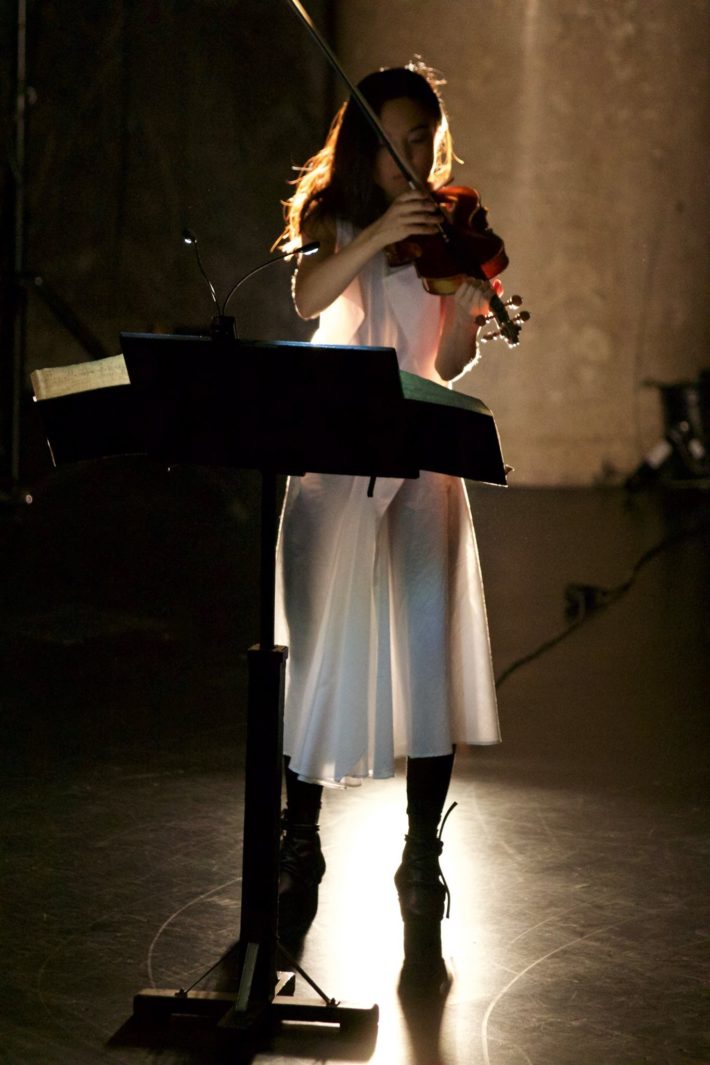
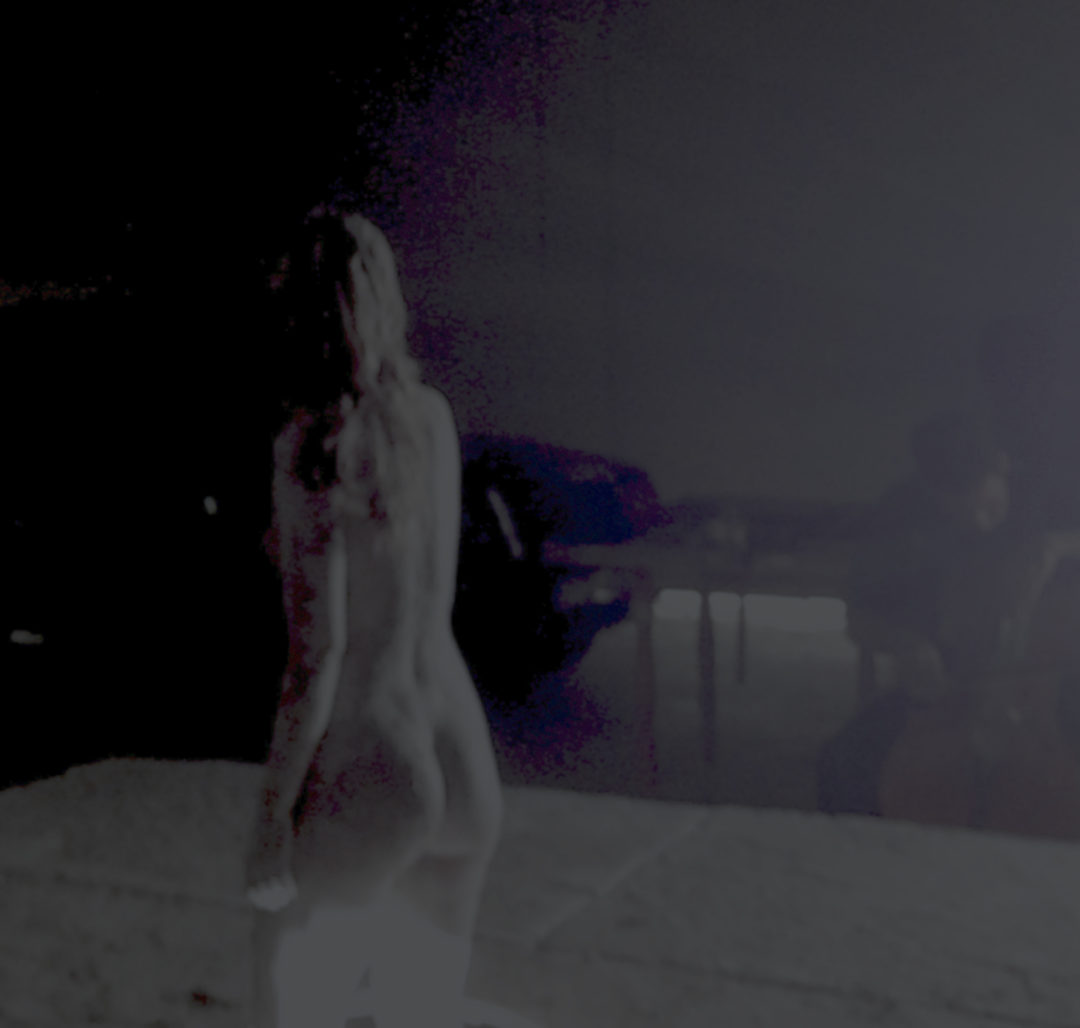
The fourth and final tutti was the end of the final movement of Beethoven’s trio, unaltered. Simultaneously, violinist Anna Faber stood up and walked with her instrument behind the audience along the tape machines toward the apse steps. As she walked, she opened her light military coat, slowly removed it, and let it drop to the floor before the steps. Underneath, she wore only a long, transparent shirt, leaving her quasi-naked with her back to the audience at the foot of the apse. The naked ascent to the apse platform was, according to Kanitz, a deliberate allusion to Gerhard Richter’s Ema (Nude on a Staircase), likely his most famous painting. Upon reaching the platform, the musician stood angled away from the audience, so that the front of her body was only faintly visible in the large steel plate of the apse. She started her click track and gave the premiere of my piece A Sentimental Journey – Air on the G-String.
A Sentimental Journey is, in a way, a conceptual piece: the right hand executes an uninterrupted alternation of up- and down-bows, disrupted by sudden, sometimes extreme tempo shifts and systematic variations in bow pressure and placement, while the left hand moves irregularly from the lowest to the highest point of the G-string, differentiating between full grip, half-harmonic, and harmonic. The result is a soundscape of extremes, where barely audible passages and overwhelmingly loud, almost mechanical noise levels—unexpected from a single violin—abruptly succeed one another.
For the evening’s concept, it was crucial that “the idea of unpacking, exposure, or opening is explicitly and comprehensibly carried through to the very end.” More important to Kanitz, however, was the “interesting contrast” between the “relatively static-looking playing, whose movements are further minimized when seen in profile,” and the “speed of the notes,” achieved through rhythmic disruptions caused by specific combinations of bow placement, pressure, and finger contact, overlaid with the speed of bow changes—making them visually imperceptible or only vaguely traceable. Much like in the prologue, but on a completely different basis, this created a sculptural quality that had “something of a religious icon, or at least something very fragile.” What the audience saw was “not a moving image but a static one,” accompanied by a “sonic progression that, in all its unpredictability”—pitch breaks, repetitions, tempo relations, dynamics—”was also predictable,” since one thing was “absolutely predictable”: that it would “rise, keep going higher,” until it “could go no higher.” This predictability—”you can practically see the length of the string, so a quarter of the piece is over,” “now we’re halfway through the piece, halfway up the string”—created an “interesting form of audience unease,” which in turn had a “strange ritualistic quality.” Yet the “pathos of this ritual” was counteracted by the “consistency and harshness” of the piece.
A Sentimental Journey begins with a one-minute, extremely fragmented up-bow from nothing to a multiple forte (the dynamics are not notated separately but result from the instructions for both hands) and ends with a 30-second down-bow into nothingness. At this moment, the lights went out, and the musician exited the apse through a side door. When the lights came back on, the apse was empty, but the three remaining musicians remained motionless on their podiums. For Kanitz, it was important that the evening did not end in a “concert-like” manner—where “the musicians signal, ‘Okay, it’s over, I’m releasing the tension, you can applaud now’”—but in a “theatrical” one: “It was blackout, and in that context, it wasn’t clear whether this was a blackout meaning the evening was over or whether the narrative would continue in another way.”
3. Summary
Although the exhibition of the 9th Berlin Biennale at the Akademie der Künste and the concert Unmöglichkeit II: Unbox by the Kaleidoskop ensemble operate in fundamentally different artistic media and thus target largely distinct audiences, several conceptual commonalities emerge—remarkable precisely given their differing foundations and representing a clear departure from conventional curatorial strategies:
1. The focus is no longer on the absolute quality of each individual work or piece, but on how they fit into the context of the exhibition or concert. It may even be that between two works of similar content or structure, the less distinctive one is deliberately chosen because it foregrounds other parameters of the exhibition or concert.
2. The curators prioritize creating an unrepeatable situation: the exhibition or concert is so precisely tailored to its location—conceived for it—that relocating would require a complete reconceptualization or be outright impossible.
3. The emphasis is less on the individual work shown or performed than on the overall impression. In this sense, the curator takes precedence over the artist or composer. It may still be possible, but no longer meaningful—and certainly not in line with the curatorial idea—to attend an exhibition or concert only to experience part of it before leaving.
4. Extreme care is taken in shaping the spatial or temporal relationships between works. The goal is not to didactically merge them or obscure their boundaries, but to deliberately design those boundaries—even if only through meticulous spacing or timing. Recognizing the edges of the works is neither difficult nor impossible, but the audience is compelled to focus not just on the works themselves but also on their borders and interstices.
5. This strategy inevitably brings the background of the exhibition or concert to the fore—not only in the sense that the event can only take place in this specific location with these specific features, but also in that the audience cannot know in advance which stimuli belong to the exhibited/performed works, which to the staging, and which to the venue itself. Intellectual engagement is required to distinguish works, transitions, gaps, and context. This is not arbitrary obfuscation but a serious, intensive confrontation with all components present in a given space.
6. The above points lead to a certain de-individualization of the works and their authors. The better a work fits into the overall context of the exhibition or concert—the more it is perceived as part of a designed exhibition space or uninterrupted concert dramaturgy—the more permeable its spatial and temporal boundaries become, along with the markers of its individuality. This does not mean the individual work disappears or becomes unrecognizable, but it is no longer presented as the unquestioned foundation of the whole; instead, it must assert itself within that whole through its individual qualities.
7. The aim is not a didactic framework geared toward knowledge transfer. A verifiable historical or artistic connection between the works is not a prerequisite for a successful exhibition or concert and would not be communicated as such. The concept is not secured by established facts (which would also secure the audience through established information) but by directly confronting the audience with the presentation. For this to succeed, it is essential that the audience is not pre-briefed on what to expect but must sort through the impressions themselves. A certain enigmatic quality (as distinct from deliberate obscurity) need not be intended but is almost inevitably part of the overall effect: the goal is to provoke questions, not answer them.
8. Conversely, this means the curators expose themselves to criticism in a way similar to artists in a conventional context. They cannot hide behind the rules and reasoning of the traditional system but must convince through the results of their decisions. In this sense, they take on tasks that far exceed the conventional understanding of an exhibition-maker or concert dramaturge. To a certain degree, the exhibition or concert itself could be understood as an independent work, whose material includes the works of the exhibited artists or the pieces of the performed composers—but also all parameters that constitute the preconditions of an exhibition or concert, especially the venue with all its essential and non-essential features, and, in the case of the concert, the performers as executants but also as the persons and bodies they factually are.
9. Crucially, the curators do not operate in personal union with the artists but represent an external instance, distinct from the artworks. Only in this way can the works be opened up to the context of the exhibition or concert through an alien gaze. The point is not to expand a work’s sphere of influence beyond its material boundaries (as the work’s author would do even if intending the opposite) but to open it up from the outside to its surroundings—something only an external decision can achieve. The type of curator making this decision fulfills a function that, as a position, has not yet been institutionalized but has already defined itself through its sphere of influence. It is a position that, due to its specific knowledge and decision-making competencies, can only be described as artistic.
Deutscher Original-Text