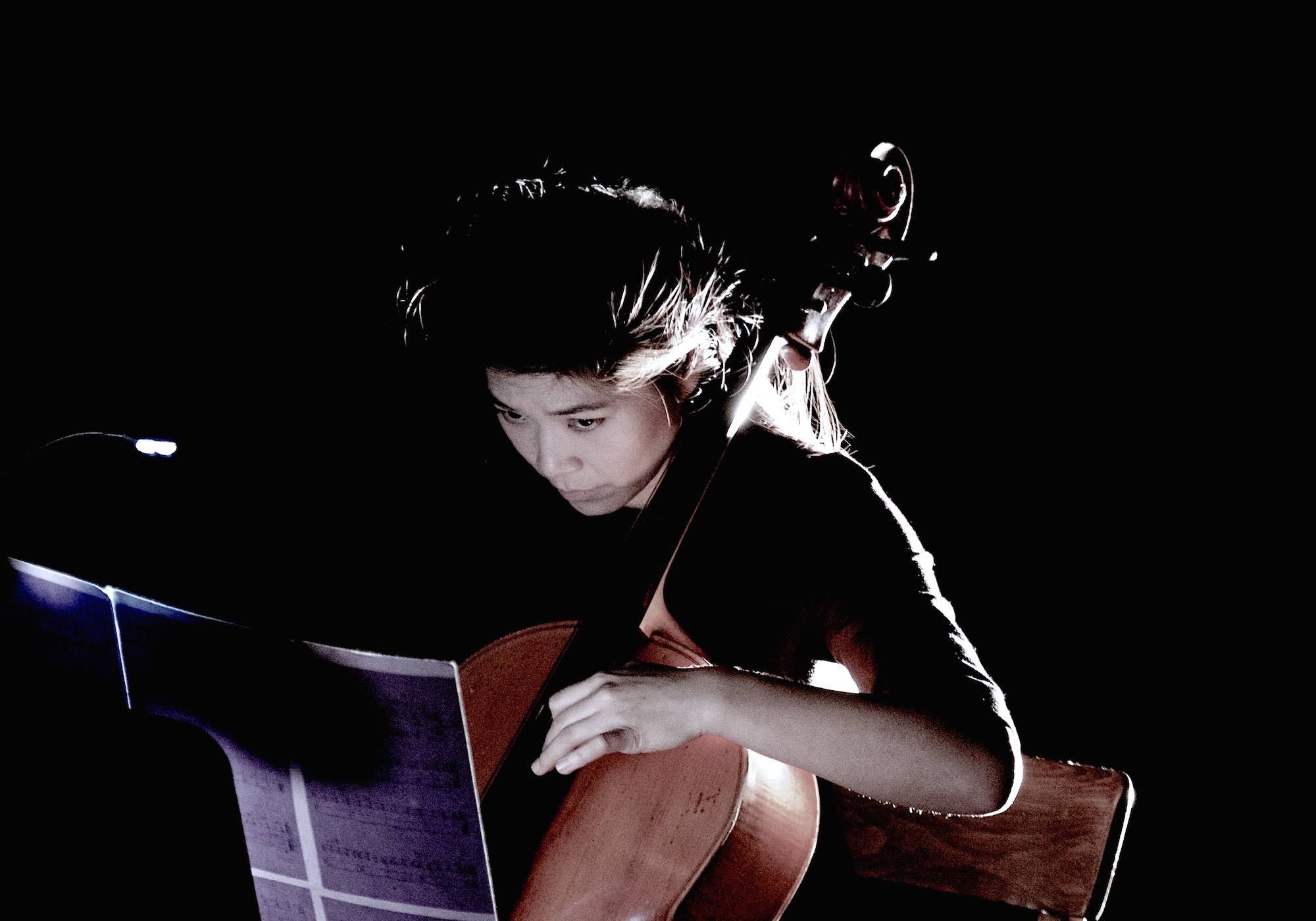
[vc_row][vc_column width=”1/3″ animation=”wpb_bottom-to-top”][vc_column_text]Solistenensemble Kaleidoskop / verein .akut
Music: Franz Schubert, Iannis Xenakis, Helmut Lachenmann, Mark Andre, Georg Friedrich Haas
Artistic Director: Tilman Kanitz[/vc_column_text][/vc_column][vc_column width=”2/3″ animation=”wpb_bottom-to-top” offset=”vc_hidden-xs”][vc_single_image image=”773″ img_size=”full” add_caption=”yes”][/vc_column][/vc_row][vc_row][vc_column width=”1/3″][/vc_column][vc_column width=”2/3″][vc_column_text]
Staub I
Excuse My Dust: de terrae fine
The year 1816 entered European history as the “Year Without a Summer,” following the massive eruption of Mount Tambora in Indonesia the year before. A colossal ash cloud drifted as far as Europe, settling in the atmosphere and altering both the climate and the visible sky. Across much of Europe and North America, the rhythm of the seasons was disrupted—winter persisted, and snow fell in some regions even during the summer months. In the years of crop failures and famine that followed, Eighteen-hundred-and-froze-to-death became a haunting expression, and in Germany and Austria, these conditions, along with political restoration, intensified the cultural use of winter metaphors.
Yet the volcanic dust in the sky brought not only prolonged cold but also a striking transformation of daylight. The European sky, veiled in fine ash, did not simply grow darker—sunrises and sunsets blazed with unusual intensity, and rare optical and meteorological phenomena such as sun dogs and “blood rain” were widely observed.
The spectral presence of the “Year Without a Summer” can be felt in many works by artists of that era. Two centuries later, Excuse My Dust: de terrae fine projects these “sun dogs” onto the stage—echoing the imagery of Wilhelm Müller and Franz Schubert’s Winterreise: “Ah, you are not my suns; go stare at someone else’s face!” How might a post-volcanic natural state sound if rendered as a score?
In collaboration with the Vienna-based .akut association, Solistenensemble Kaleidoskop performs Schubert’s late String Quintet in a way never heard before—backwards and retroactively, interwoven with works by Mark Andre, Georg Friedrich Haas, Iannis Xenakis, and Anton Webern.
Excuse my dust is a voice from afar—put, so to speak, into the mouth of a volcano and made audible. Its eruptions appear colored: sometimes grey, sometimes whitish, sometimes black. If one touches its residue, it feels like tuff, stone, or sand. Translated into music, it resonates as noise, clusters, microtones.
Program:
Franz Schubert – String Quintet in C major, D 956 (IV: Allegretto) (1828)
Mark Andre – E for solo cello (2012)
Helmut Lachenmann – Toccatina. Study for solo violin (1986)
Iannis Xenakis – Ittidra for string sextet (1996)
Franz Schubert – String Quintet in C major, D 956 (III: Scherzo. Presto – Trio. Andante sostenuto) (1828)
Georg Friedrich Haas – de terrae fine for solo violin (2001)
Franz Schubert – String Quintet in C major, D 956 (I: Allegro ma non troppo) (1828)
Franz Schubert – String Quintet in C major, D 956 (II: Adagio) (1828)
Anton Webern – Six Bagatelles for String Quartet, op. 9 (1911–1913)
Solistenensemble Kaleidoskop
Concept: Tilman Kanitz and Han-Gyeol Lie
Artistic Direction: Tilman Kanitz
A production by .akut – Association for Aesthetics and Applied Cultural Theory and Solistenensemble Kaleidoskop, with the kind support of Erste Bank and in cooperation with Wien Modern.
Excuse My Dust: de terrae fine
Als Jahr ohne Sommer ist 1816 in die europäische Geschichte eingegangen, nachdem im Vorjahr in Indonesien der Vulkan Tambora ausgebrochen war. Eine gewaltige Aschewolke zog bis nach Europa, legte sich in die Atmosphäre und veränderte das Klima und die Sicht auf den Himmel. Der Rhythmus der Jahreszeiten war in weiten Teilen Europas und Nordamerikas gestört – Winter breitete sich aus, noch in den Sommermonaten fiel mancherorts Schnee. Achtzehnhundertunderfroren wurde in den folgenden Jahren der Missernten und Hungersnöte zu einem Begriff, der in Deutschland und Österreich auch vor dem Hintergrund der politischen Restauration den verstärkten Rekurs auf Wintermetaphern nahelegte.
Doch der Vulkanstaub in der Atmosphäre hatte nicht nur eine ausgedehnte Periode der Kälte zufolge, er bewirkte auch eine eindrückliche Veränderung des Tageslichts. So wurde der Himmel über Europa durch den ungewöhnlichen Staubanteil in der Luft keineswegs nur düsterer, vielmehr färbten sich auch die Sonnenauf- und untergänge mit besonderer Intensität und seltene Licht- und Niederschlagsphänomene wie Nebensonnen und Blutregen wurden beobachtbar.
Das Jahr ohne Sommer lässt sich in vielen Werken von Künstlern aus dieser Zeit erahnen. 200 Jahre später projiziert Excuse My Dust: de terrae fine Nebensonnen auf die Bühne, wie sie Wilhelm Müller und Franz Schubert in der Winterreise entwarfen: „Ach, meine Sonnen seid ihr nicht, schaut andern doch ins Angesicht!“. Wie könnten nachvulkanische Naturzustände klingen, wären sie als Partitur gesetzt?
In Kooperation mit dem Wiener Verein .akut führt das Solistenensemble Kaleidoskop Schuberts spätes Streichquintett in nie gehörter Weise auf – rückwärts und rückwirkend, zwischen und verwoben mit Werken von Mark Andre, Georg Friedrich Haas, Iannis Xenakis und Anton Webern.
Excuse my dust ist ein Ausspruch von weit her, einem Vulkan in dem Mund gelegt und hörbar gemacht. Sieht man seine Auswürfe, so färben sie sich: mal grau, mal weisslich, mal schwarz. Betastet man sein Material, so fühlen es sich an: wie Tuff, wie Stein, wie Sand. In Musik gesetzt erklingen sie wie: Rauschen, Cluster, Mikrotöne.
Franz Schubert – Streichquintett C-Dur D 956 (IV: Allegretto) (1828)
Mark Andre – E für Violoncello solo (2012)
Helmut Lachenmann – Toccatina. Studie für Violine allein (1986)
Iannis Xenakis – Ittidra für Streichsextett (1996)
Franz Schubert – Streichquintett C-Dur D 956 (III: Scherzo. Presto – Trio. Andante sostenuto) (1828)
Georg Friedrich Haas – de terrae fine für Violine solo (2001)
Franz Schubert – Streichquintett C-Dur D 956 (I: Allegro ma non troppo) (1828)
Franz Schubert – Streichquintett C-Dur D 956 (II: Adagio) (1828)
Anton Webern – Sechs Bagatellen für Streichquartett op. 9 (1911–1913)
Solistenensemble Kaleidoskop
Konzept: Tilman Kanitz und Han-Gyeol Lie
Künstlerische Leitung: Tilman Kanitz
Eine Produktion von .akut – Verein für Ästhetik und angewandte Kulturtheorie und Solistenensemble Kaleidoskop mit freundlicher Unterstützung von Erste Bank, in Kooperation mit Wien Modern.
[/vc_column_text][/vc_column][/vc_row]